
前幾天我們看過了單向鏈結串列與他的實作,今天我們來看雙向鏈結串列吧 !
昨天在做 Reverse Linked List 時,我們發現一件事:
1 → 2 → 3 → 4
如果目前站在節點 3:
1 → 2 → 3 → 4
        ↑
我們可以知道:
node->next
也就是:4
但卻不知道:2
為了解決這個問題,
我們可以讓每個節點除了記錄下一個節點之外,再額外記錄前一個節點
節點結構
單向鏈結串列
struct Node{
    int data;
    Node* next;
};
雙向鏈結串列
struct Node{
    int data;
    Node* prev;
    Node* next;
};
data:存放資料
prev:指向前一個節點
next:指向下一個節點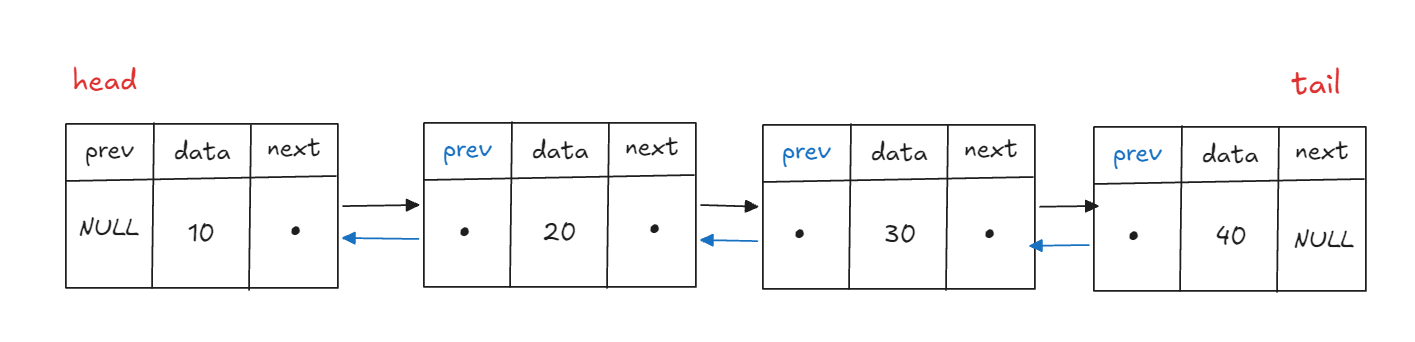
每個節點都同時知道「前面是誰」跟「後面是誰」,
頭節點(head)的 prev 和尾節點(tail)的 next 則指向 nullptr。
建立一個節點
Node* node=new node{10,nullptr,nullptr};
data = 10
prev = nullptr
next = nullptr
昨天寫 Reverse Linked List 時,用了 prev 和 cur 兩個指標邊走邊反轉:
ListNode* prev = nullptr;
ListNode* cur = head;
while (cur != nullptr) {
    ListNode* next = cur->next;
    cur->next = prev;
    prev = cur;
    cur = next;
}
回頭看這段程式碼會發現一件事:prev 和 cur 這兩個指標,其實就是在模擬雙向鏈結串列節點裡的 prev 和 next
只是單向鏈結串列本身沒有 prev 這個欄位,所以只能用額外的變數,在走訪過程中暫借這個角色,一步一步把方向接起來
換句話說:
prev 和 next,隨時可以雙向查詢。prev、cur 這兩個暫時性的外部指標,在走訪的當下模擬出「知道前一個節點是誰」的效果,走過去之後這個資訊就跟著指標移動,不會留在節點本身正向/反向走訪
void printForward() {
    Node* cur = head;
    while (cur != nullptr) {
        cout << cur->data << " ";
        cur = cur->next;
    }
}

void printBackward() {
    Node* cur = tail;
    while (cur != nullptr) {
        cout << cur->data << " ";
        cur = cur->prev;
    }
}
單向鏈結串列做不到這件事(除非額外用堆疊或遞迴模擬)
(尾端插入)
struct Node{
    int data;
    Node *prev;
    Node *next;
    Node(int x){
        data=x;
        prev=nullptr;
        next=nullptr;
    }
};

Node* head=nullptr;
Node* tail=nullptr;
void insertAtTail(int data){
    Node* newNode = new Node(data);
    if (head == nullptr) {
        head = tail = newNode;
        return;
    }
    tail -> next = newNode;
    newNode ->prev = tail;
    tail = newNode;
}
int main(){
    insertAtTail(10);//從0開始依序插入 10 -> 20 -> 30 -> 40
    insertAtTail(20);
    insertAtTail(30);
    insertAtTail(40);
    return 0;
}
void insertAtHead(int data){
    Node* newNode= new Node(data);
    if(head = nullptr){
        head = tail = newNode;
        return;
    }
    newNode -> next = head;
    head -> prev = newNode;
    head = newNode;
}
void deleteNode(Node* target) {
    if (target == nullptr) return;

    if (target->prev != nullptr) {
        target->prev->next = target->next;   // 前一個節點跳過 target
    } else {
        head = target->next;                  // target 是 head,更新 head
    }

    if (target->next != nullptr) {
        target->next->prev = target->prev;   // 後一個節點跳過 target
    } else {
        tail = target->prev;                  // target 是 tail,更新 tail
    }

    delete target;
}
| 比較項目 | 單向鏈結串列 | 雙向鏈結串列 |
|---|---|---|
| 指標數量 | 1 個(next) | 2 個(prev、next) |
| 走訪方向 | 只能往後 | 可雙向走訪 |
| 記憶體開銷 | 較小 | 每個節點多一個指標,開銷較大 |
| 刪除節點 | 需要額外走訪找到前一個節點 | 直接透過 prev 存取,不需要重新走訪 |
| 插入節點 | 只需改 next | 需同時維護 prev 和 next,較繁瑣 |
終於撐到第 10 天了,這幾天真的遇到好多事情@@,那接下來幾天繼續加油吧
參考資料和書籍



 iThome鐵人賽
 看影片追技術