
Tool discovery、Tool availability 與執行某次 Action 的 authorization 為何必須分離?
財務 Agent 連上 CRM Gateway 後看見 read_record 與 delete_record。工程師把「能列出兩個工具」理解成「這個 Agent 可以叫兩個工具」,於是在 Agent process 裡放入下游 credential。模型只要產生合法 schema 的 delete_record,就直接造成 side effect。這裡的問題不是工具描述錯,而是把 capability discovery 當成 permission grant。
這不是傳統 IAM 的單純角色查詢。Agent 會在同一個 Task 裡動態選工具、改參數,且 Tool output 可能影響下一個 Action;因此每次執行都要重新判斷 actor、代表的 User、Task、resource 與當下 context。
Alice 只被允許讀取 crm://customer/42。Catalog 回傳 read/delete 的完整 schema,Agent 先讀取 42,接著被資料中的文字誘導,把 delete_record(id=42) 當成下一步。若 Gateway 只在連線建立時檢查「Agent 有 CRM 權限」,delete 便會成功。事後只看得到工具名稱,無法證明這個 resource、operation、Task 是否曾獲准。
Agent 直接呼叫 catalog 裡的任何 Tool,持有可執行的下游 credential;初始化時做一次粗粒度檢查。
Agent 只提交 proposed Action。Gateway 驗證 Agent identity 與 delegation,將 operation、resource 和參數正規化後詢問 PDP。PDP 回傳 allow、deny 或 allow + constraints;Gateway 在執行前再次檢查 constraints,Tool 仍做 resource-level defense in depth。Tool credential 只存在 Gateway,Agent 無法繞過 PEP。
User/delegation、Agent runtime、authorization plane(PEP/PDP)、Tool/resource 是不同邊界。Catalog 可被不可信內容影響,不能成為授權來源。
請求保留 subject=alice、actor=agent://finance/v3/instance/7、task_id=T-16、audience=crm-gateway 與 expiry。Agent 自己加上的 claim 不算證據;Gateway 從受信任 issuer 驗證。OAuth token 的 resource/audience binding 可參考 RFC 8707。
PDP 決策輸入至少如下:
{"actor":"agent://finance/v3/instance/7","subject":"alice","task":"T-16","operation":"read_record","resource":"crm://customer/42","context":{"purpose":"invoice-review"}}
read_record 對 42 可 allow;delete_record 或不同 resource 應 deny。決策也要記 policy version、reason 與 action digest。
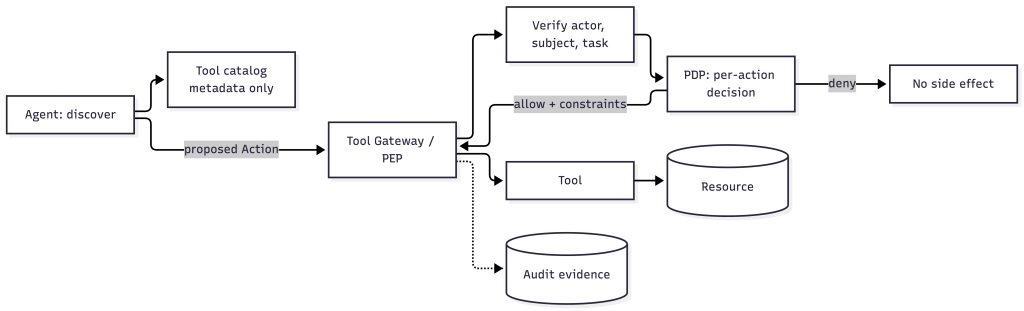
下面的標準庫程式同時證明「可 discovery」與「只有指定 resource 的 read 可執行」;沒有新增依賴。
tools = ["read_record", "delete_record"]
grant = {"operation": "read_record", "resource": "crm://customer/42"}

def decide(operation, resource):
    return operation == grant["operation"] and resource == grant["resource"]

assert tools == ["read_record", "delete_record"]
assert decide("read_record", "crm://customer/42") is True
assert decide("delete_record", "crm://customer/42") is False
assert decide("read_record", "crm://customer/99") is False
print("discovery=ok allow=read/42 deny=delete/42,read/99")
Day 17 把這個問題放進 MCP:Server 暴露二十個 tools 時,連線成功、tool listing 與每次 tools/call 的授權到底如何分層。



 iThome鐵人賽
 看影片追技術