
如何把 identity、delegation、authorization、approval、revocation 與 evidence 整合成可落地、可演進的企業架構?
企業想讓「採購 Agent」替員工查詢供應商、建立訂單、要求主管批准高風險付款。若只發一個萬能 Agent token,所有問題都被壓在同一個 subject:誰在跑、代表誰、可以做什麼、撤銷是否生效、如何證明,全部無法分辨。本系列的答案是一組可組合的 authority controls,而不是單一 token。
Agent 會把 intent 動態拆成多個 Action、跨 Tool 組合、代表 User、委派給其他 Agent,並在長任務中遇到 approval、revocation 與 partial outcome。企業 reference architecture 必須同時處理 control plane、runtime plane 與 evidence plane;拿掉 Agent 後,這個多步 autonomous authority lifecycle 不再成立。
若企業只發一個萬能 Agent token,任一 Tool 都可能把 User、Agent、Task 與 approval 壓成同一 subject;撤銷、最小權限、歸責與事後證明都會失去可操作的 enforcement point。
三個問題貫穿全系列:Agent 是誰?由可驗證的 workload/instance identity 回答;代表誰?由 User subject 與 bounded Delegation Context 回答;憑什麼執行?由逐 Action PDP decision、必要的 Human Approval、PEP enforcement 和 Resource-side check 回答。Task、資料標籤、Tool composition、期限、risk 和 revocation epoch 都是 decision input。
User -> Agent (萬能 token) -> every Tool -> Resource
log: HTTP status only
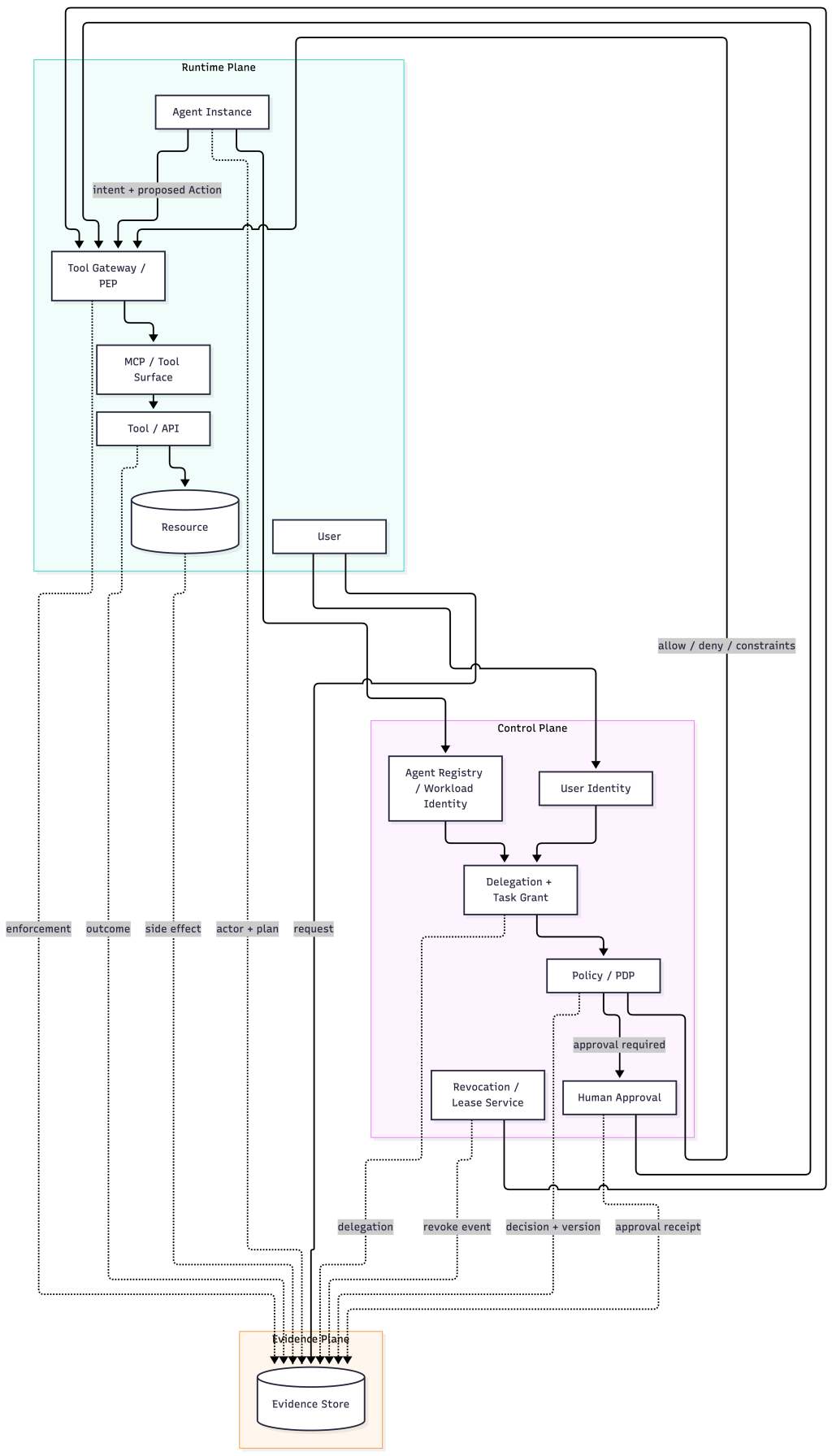
Control plane 管理註冊、identity、delegation、policy、approval 與 revocation;runtime plane 執行 Agent plan、Gateway、Tool 和 Resource;evidence plane 關聯 request → decision → execution → outcome。Trust boundaries 不因同一 cluster 而消失:User/Agent、Agent/Gateway、Gateway/PDP、Gateway/Tool、Tool/Resource 各自驗證。Identity flow 是 subject + actor + task grant → PDP;Authorization Decision Point 是 PDP,PEP 是 Gateway,Resource 保留最後防線。
Cloud 或產品 mapping 應在這個通用模型之後進行:任何能提供 workload identity、policy decision、gateway enforcement、簽章金鑰和 immutable/evidentiary storage 的組合都可實作;不能以某個平台的 service account 取代上述責任分界。
state = {"grant": True, "approval": False, "revoked": False, "evidence": []}
def decide(action):
    if state["revoked"]: return "deny:revoked"
    if action == "pay" and not state["approval"]: return "approval_required"
    return "allow"
def run(action):
    d = decide(action); state["evidence"].append((action, d))
    if d == "allow": state["evidence"].append((action, "outcome:success"))
    return d

assert run("read") == "allow"
assert run("pay") == "approval_required"
state["approval"] = True
assert run("pay") == "allow"
state["revoked"] = True
assert run("notify") == "deny:revoked"
assert [x[1] for x in state["evidence"]] == ["allow", "outcome:success", "approval_required", "allow", "outcome:success", "deny:revoked"]
print("allow, approval, allow-after-approval, deny-after-revocation")
PoC 覆蓋 allow、deny、approval、revocation 與 audit reconstruction 的最小狀態路徑;它沒有實作真實簽章、分散式一致性或 provider compensation,這些是部署前必須另外做的整合驗證。
這是 30 天系列的終點,也是企業落地工作的起點。接下來應以這套 reference architecture 逐步驗證自身的 Agent use case、trust assumptions 與 enforcement gaps,而不是尋找一個能取代整套架構的萬能 Token。



 iThome鐵人賽
 看影片追技術