
不要期待 AI 自己知道架構規則,而是把規則變成 AI 可以遵循的 Engineering Constraint
昨天看到 AI 很會寫 UI,卻不一定知道專案已經有這個 UI 實戰中這是很典型的問題,例如要求 AI 做一個 Dialog,它可能直接建立:
<ConfirmDialog />
但專案裡其實已經存在:
<BaseDialog />
問題開始從 UI 實作轉向 Architecture:
如果這些規則只存在工程師腦中,AI 很難穩定遵守。
最基本的做法,是把規則直接寫進 AI 的 Instructions,例如,建立 Dialog 前:
Before creating a new Dialog:

1. Check existing Dialog components.
2. Prefer existing variants.
3. Use props or slots for content variation.
4. Do not create a new Dialog for styling differences.
5. Create a new component only when behavior
   or responsibility is structurally different.
這比單純寫 Do not create duplicate Dialog components. 有效得多。
因為後者只有限制,前者提供了判斷順序,但這裡還有一個問題:
AI 要去哪裡找既有 Component?
假設專案裡有:
components/
├── BaseDialog.vue
├── ConfirmDialog.vue
├── WarningDialog.vue
└── FormDialog.vue
光看檔名,AI 很難知道它們各自的 Boundary,例如:
ConfirmDialog
├── DeleteUser
├── DeleteAccount
└── RemoveItem
這些需求可能都屬於同一種 Interaction Pattern,真正需要重用的,是 Dialog 的 結構與行為。
Vue 的 Props、Slots 與 Component Composition 本身就提供了這種拆分方式:
固定結構留在 Component,變動內容交給使用端。
所以 Prompt 解決的是 遇到需求時,AI 應該遵循什麼判斷規則?
只有規則還不夠,如果告訴 AI:Prefer existing components. 卻沒有清楚描述有哪些元件可以使用,AI 還是只能從 Repository 裡猜,這就是 Design System 的另一個作用。
例如:
Design System

Dialog
├── BaseDialog
├── Confirm
├── Warning
└── Form

Button
├── Primary
├── Secondary
└── Danger

Form
├── FormField
├── Select
└── DatePicker
當需求變成建立刪除帳號確認視窗,AI 可以沿著既有 Architecture 找:
Delete Account
      ↓
Confirmation
      ↓
Confirm Dialog
      ↓
BaseDialog
      ├── title
      ├── message
      └── actions
而不是從零開始建立 AccountDeleteDialog.vue,這就是 Design System 對 AI Coding 的實際價值:
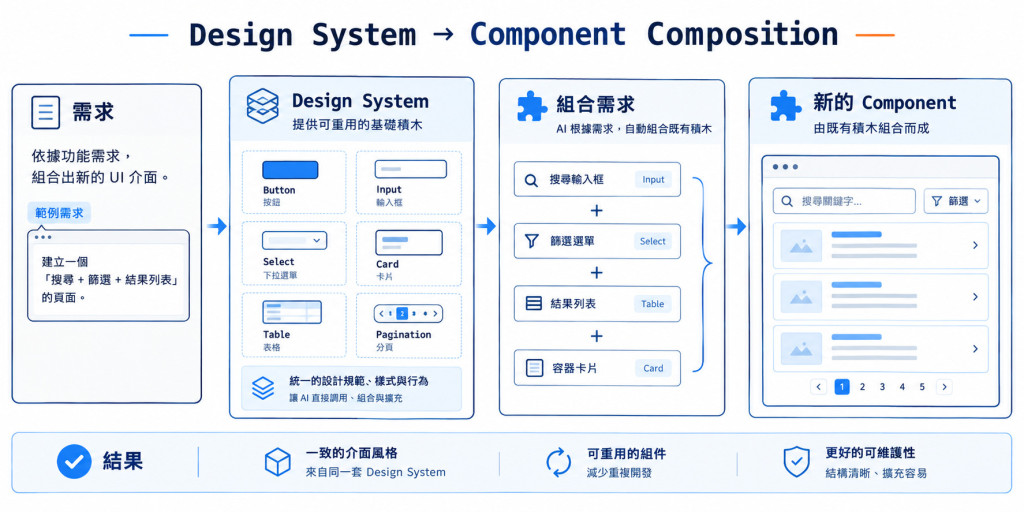
把 Architecture 轉成可以被選擇與組合的元件。
Storybook 之類的工具也可以協助整理 Component、Variants、Stories 與使用方式,讓這些資訊更容易被工程師與 AI 查找。
即使 Design System 很完整,AI 還是可能建立 AccountDeleteDialog.vue,理由可能是:
The title is different.
The button color is different.
The button text is different.
這時 Code Review 可以增加一個 Architecture 問題:Why does this need to be a new Component?
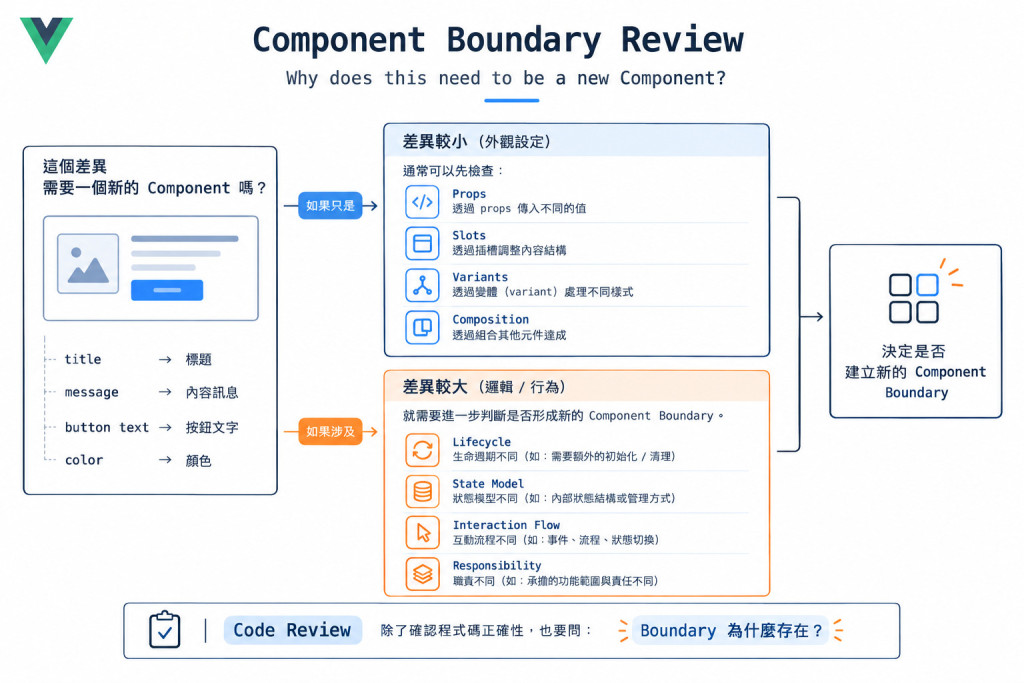
可以先判斷 Component 之間差異是否可以透過 Props、Slots、Variants 或是 Composition 設定?
如果差異涉及 Lifecycle、State Model、Interaction Flow、Responsibility,就需要進一步判斷是否形成新的 Component Boundary。
因此 Code Review 可以從 Code 正不正確,增加「 Boundary 為什麼存在?」這個問題。
到這裡可以把三層責任分開:
| Layer | 解決的問題 |
|---|---|
| Prompt / Instructions | AI 應該怎麼判斷 |
| Design System | AI 可以使用什麼 |
| Code Review | 新 Boundary 是否合理 |
例如把 Component Architecture 直接寫成規則:
Component Rules

1. Prefer existing shared components.
2. Prefer variants over duplicated components.
3. Use slots for content variation.
4. Use props for data variation.
5. Create a new component when responsibility
   or behavior is structurally different.
6. Every new shared component requires
   a boundary rationale.
這些規則可以進一步放進:
Repository
├── AI Instructions
├── Design System
├── Component Docs
└── Code Review Rules
Architecture 就從口頭規範,變成 Repository 裡可以被查詢、遵循、Review 的 Engineering Constraint。
三層放在一起,就形成一個很實際的流程:
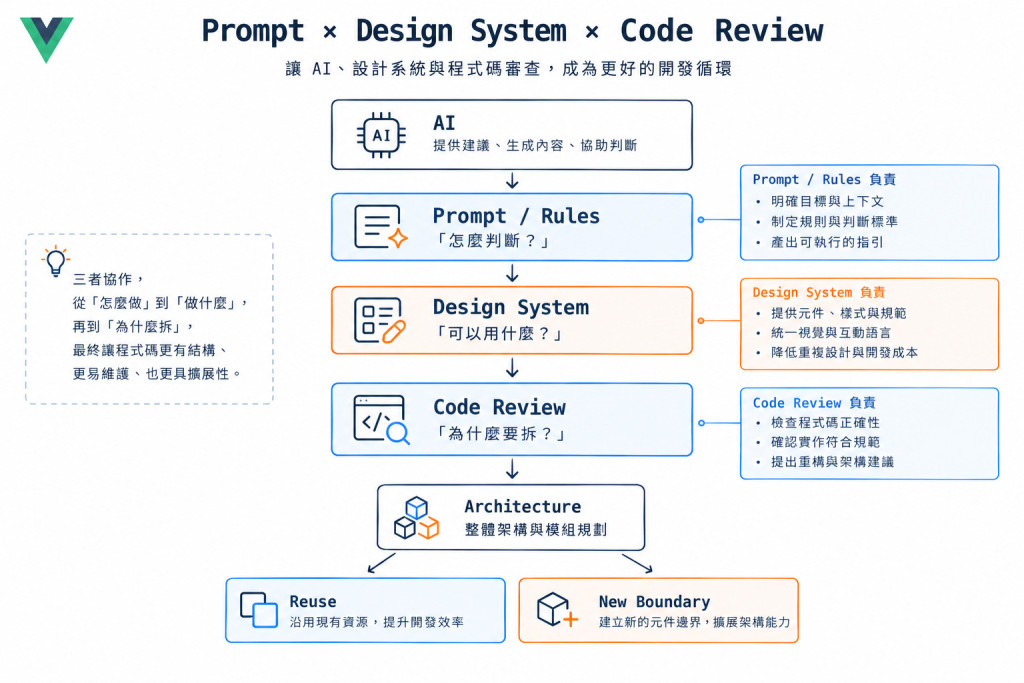
昨天處理 AI 為什麼一直產生重複 UI?
今天進一步處理 怎麼讓 AI 在既有 Architecture 裡做決策?
答案可以收斂成三件事:
Prompt 定義規則,Design System 提供選項,Code Review 驗證 Boundary。
這套機制的目的,也就從要求 AI 少寫一點 Code,轉成讓 AI 在既有 Architecture 中選擇正確的 Code。



 iThome鐵人賽
 看影片追技術