
Day 10 把值班工程師的入口 Token 原樣送到第二個 MCP Server,結果不是撞上 audience 驗證,就是讓 Audit 誤以為整條鏈都由同一個人操作。這個洞不能靠「再發一枚 Token」帶過,因為 Agent 平台上至少有三種性質不同的工作。
值班工程師從 CLI 發起查詢時,人還在線上。凌晨執行固定報表時,只剩 Scheduler 自己工作。Investigator runtime 代表值班工程師呼叫 Observability MCP 時,Human 與目前執行者又得同時留下來。如果三種情境共用同一份 client credential,API 也許都能回 200,Token 卻會開始代表錯的人。
這次 Day 11 Lab 分別跑 Authorization Code + PKCE、Client Credentials 與 RFC 8693 Token Exchange,再故意放入 callback、scope、registration、client type、target 與 audience 錯誤。九組結果都符合預期,三枚成功 Token 則留下三種不同的 principal:
| 工作 | 成功 Token 代表誰 | OAuth flow |
|---|---|---|
| 值班工程師從 CLI 啟動 Agent | user/sre-oncaller |
Authorization Code + PKCE |
| Scheduler 定時查詢 | client/sre-scheduler |
Client Credentials |
| Runtime 代表值班工程師呼叫下游 | user/sre-oncaller via client/sre-investigator-runtime |
RFC 8693 Token Exchange |
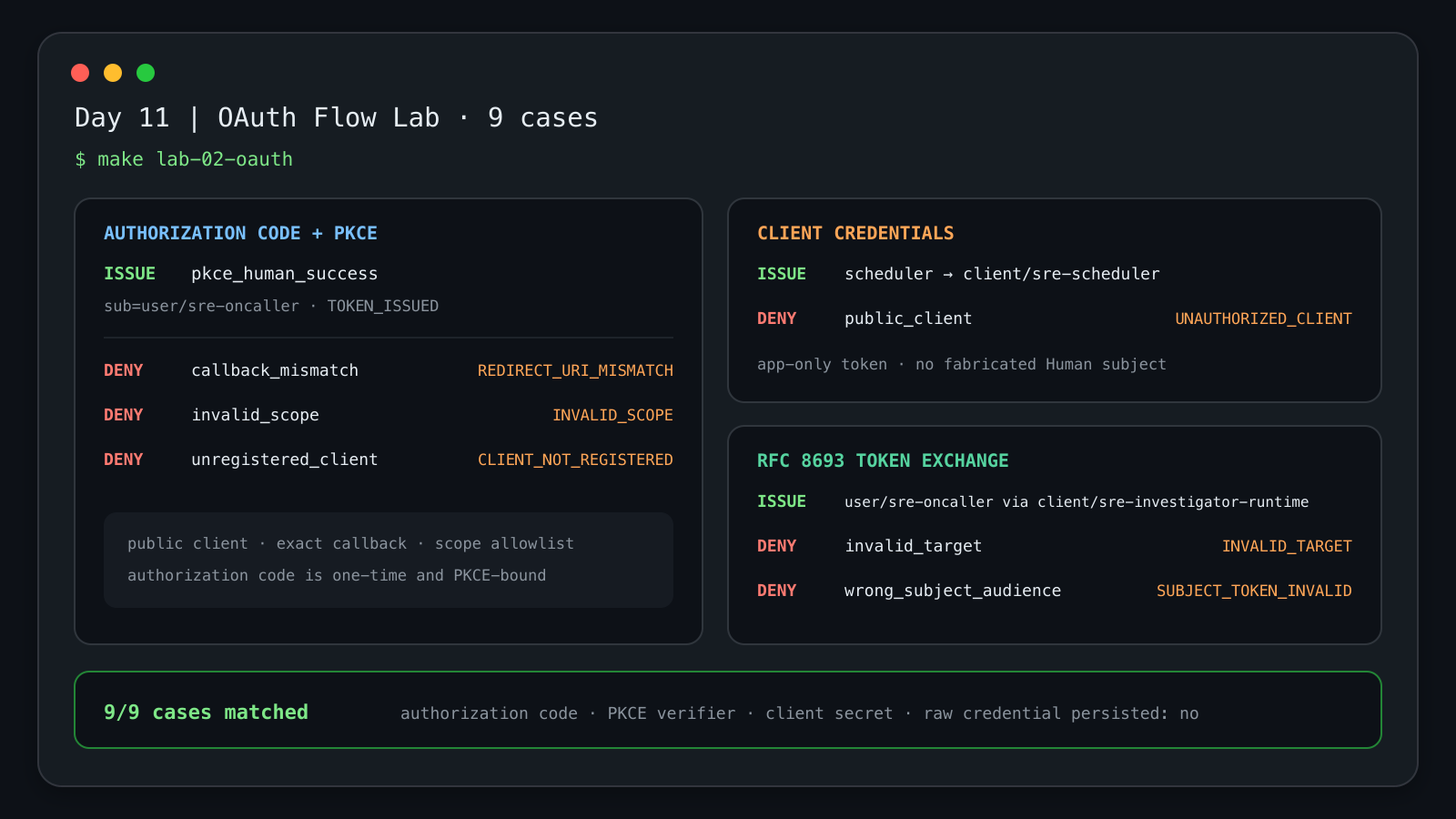
圖片是 make lab-02-oauth 的實際結果重新排版,指令與完整表格都留在正文。Manifest、decision event 與合成 Token claims 收在 Day 11 evidence,不需要從圖片抄字。
我早期在接不同 MCP client 時,很容易把所有錯誤都收斂成一句「OAuth 沒設好」。實際追下去,問題通常散在三個位置:Authorization Server 認不認得這個 client、這次工作由誰授權,以及拿到的 Token 到底要送給哪個 resource。
client 怎麼被認得?          registration
這次工作由誰授權?           grant / flow
Token 要交給哪個服務?       resource / audience
這三項有任何一項沒對齊,換 grant type 通常只會把錯誤往後推。更麻煩的是,即使 Token 成功發出,principal 也可能已經選錯。下面這張圖把 protocol round trip 收掉,只保留每條路徑最關鍵的輸入與最後的 Token 語意。
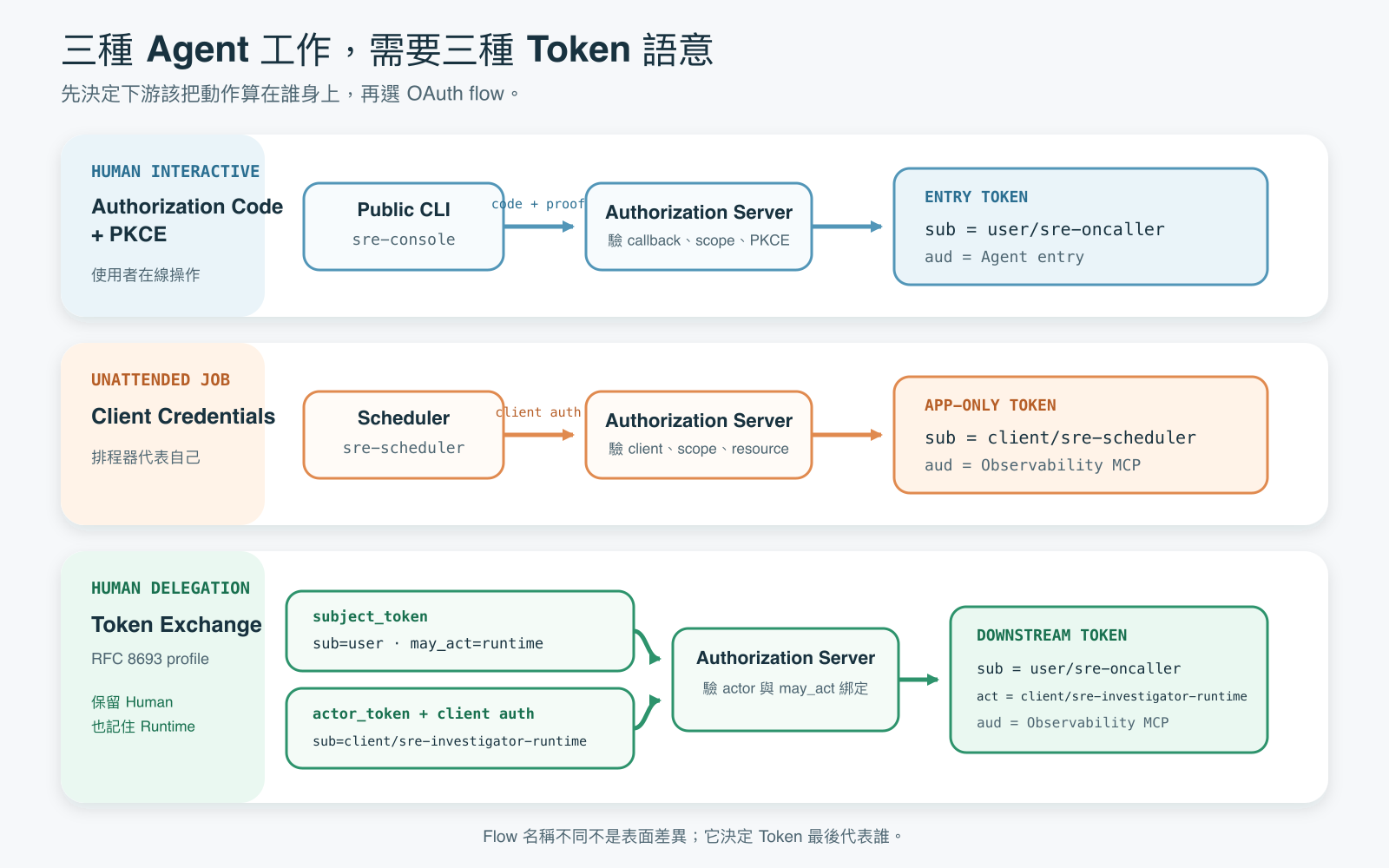
互動式 CLI 適合走 Authorization Code + PKCE。Public client 無法可靠保存長期 client secret,所以每次登入先建立一次性的 code_verifier,把 S256 code_challenge 放進 authorization request,最後再用原本的 verifier 兌換 authorization code。
RFC 7636 規定 verifier 長度必須在 43 到 128 個 unreserved characters 之間,能使用 S256 的 client 就必須使用 S256。Lab 每次產生 32-byte random verifier,Authorization Server 只保存 challenge。Code 成功兌換後會立刻標成 consumed,同一個 code 再送一次就回 INVALID_GRANT。
public client: sre-console
redirect URI: http://127.0.0.1:8765/callback
resource:     https://agent.lab.example/mcp
scope:        agent.delegate
result:       sub=user/sre-oncaller, aud=Agent entry
這條 flow 的成功 Token 表示值班工程師正在操作,client_id=sre-console 則保留他是從哪個 public client 進來。兩個欄位不能互相取代,否則 Audit 只看得到人,卻分不出是 Web、CLI 還是其他入口。
我實際串接不同 MCP client 時,最花時間的往往不是 PKCE 本身,而是 client 對 registration 與 callback 的假設不同。有的 client 使用 localhost,有的固定送 127.0.0.1。我也遇過 client 預期能自動註冊,Authorization Server 卻只接受事先建立的 client。Discovery 顯示某個 scope,也不表示這個 app client 的 allowlist 已經放行。
Lab 把已註冊的 callback:
http://127.0.0.1:8765/callback
換成同 port、同 path 的 http://localhost:8765/callback,結果仍是 REDIRECT_URI_MISMATCH。修這類問題時,我現在會先記錄 client 實際送出的 scheme、host、port 與 path,再回頭調整 registration,不會先猜「這兩個網址應該差不多」。
Registration 的現況也和我最初踩坑時不同。現行 MCP Client Registration 2026-07-28 依序考慮 pre-registration、Client ID Metadata Documents(CIMD)、已 deprecated 的 DCR fallback,最後才是手動輸入 client information。這個版本的 MCP 規格引用的是當時的 CIMD draft-00,IETF 後來已更新到 draft-02。CIMD 讓 client_id 本身成為 HTTPS metadata URL,但它仍是 Internet-Draft,也沒有消除 metadata fetch、redirect URI 驗證、SSRF 與 phishing 等風險。這份 offline Lab 沒有假裝架出 CIMD 或 DCR endpoint,只保留一個基本 contract:Authorization Server 不認得 client,就不能繼續簽 code。
Scope 則有兩份清單要對。MCP client 會先看 WWW-Authenticate challenge,沒有時才參考 protected resource metadata 的 scopes_supported,Authorization Server 還是要檢查該 client 自己的 allowlist。Lab 讓 client 要求 admin.everything,registration 卻只允許 agent.delegate 與 observability.query,因此在 authorization request 階段回 INVALID_SCOPE。Discovery 告訴 client「這次操作需要什麼」,不等於替它完成授權。
真正上線的 browser flow 還要處理 state、consent 與 authorization response 的 issuer 驗證。現行 MCP Authorization 規格 要求 client 把 expected issuer 與同一筆 PKCE/state request record 綁定,收到 callback 後先驗 iss,再拿 code 去 token endpoint。Offline Lab 沒有跑瀏覽器,所以這些項目沒有被算進 PASS。
Scheduler 凌晨自己跑任務,不需要替它虛構一名值班工程師。它是 confidential client,向 Authorization Server 證明自己的身分後,以 Client Credentials 取得 app-only token。這枚 Token 的 Audit principal 就是 Scheduler:
{
  "sub": "client/sre-scheduler",
  "client_id": "sre-scheduler",
  "aud": "https://observability.lab.example/mcp",
  "scope": "observability.query"
}
RFC 6749 section 4.4 把 Client Credentials 限定給 confidential clients。Lab 另外讓 public CLI 嘗試相同 grant,Authorization Server 在 client authentication 階段就回 UNAUTHORIZED_CLIENT,不需要再判斷那串 secret 對不對。
把固定 secret 打包進 CLI、desktop app 或 container image,不會讓 public client 變成 confidential client。那只會讓每個能讀到 binary、image layer 或環境變數的人,共用一把難以追責的 credential。無人工作若真的需要 Client Credentials,secret 的保存與輪替責任也必須一起進入平台設計。
第三種工作不能直接套 Scheduler 的答案。值班工程師已經用入口 Token 請 Agent 查 log,Investigator runtime 現在要呼叫 Observability MCP。若 Runtime 改拿 app-only token,下游只會看到 client/sre-investigator-runtime。沿用 Human 的入口 Token,則會重演 Day 10 的 passthrough 問題。
這份 Lab 因此採用 RFC 8693 OAuth 2.0 Token Exchange,而且明確使用 delegation profile:
runtime client authentication
+ subject_token      = 值班工程師的 Agent entry Token
+ actor_token        = Investigator runtime 的 Token
+ resource           = Observability MCP
+ scope              = observability.query
RFC 8693 的 actor_token 在通用 request grammar 裡是 optional。不過同一份 RFC 的 delegation 範例也說得很清楚,只有 subject_token 而沒有 actor 時,表達的是 impersonation,不足以建立 delegation。這次 Lab 要驗證的是後者,因此把 actor_token 設成必要條件。
Authorization Server 先驗 Runtime 的 client authentication 與兩種 Token type,也把 resource、scope 限制在這個 client 的 allowlist 內。接著才分別驗證 Human subject_token 與 Runtime actor_token。Actor Token 的 subject 必須和已驗證的 confidential client 一致,Human Token 裡的 may_act.sub 也必須允許這個 actor。全部通過後,才會發出一分鐘有效、只給 Observability MCP 的 Token:
{
  "sub": "user/sre-oncaller",
  "act": {
    "sub": "client/sre-investigator-runtime"
  },
  "client_id": "sre-investigator-runtime",
  "aud": "https://observability.lab.example/mcp",
  "scope": "observability.query"
}
sub 保留被代表的值班工程師,act 則指出目前執行者。把 target 換成未授權的 Billing MCP 會得到 INVALID_TARGET。拿原本發給其他 resource 的 Human Token 來換,會在 subject_token stage 因 AUDIENCE_MISMATCH 被拒絕。Unit test 還多跑了一次 actor 綁定錯誤,確認 may_act 沒有授權目前 Runtime 時回 ACTOR_NOT_AUTHORIZED。
Microsoft Entra 的 On-Behalf-Of(OBO)處理相近的 middle-tier delegation 問題,request profile 卻不同。Entra OBO 文件 使用 JWT bearer grant、assertion 與 requested_token_use=on_behalf_of,不能直接拿 RFC 8693 的 request body 套上去。平台選哪一條要看 IdP 的公開合約。產品兩邊都不支援時,也不能默默退回 Token passthrough。
| Case | Flow | Decision | Code | Principal |
|---|---|---|---|---|
pkce_human_success |
Authorization Code + PKCE | ISSUE | TOKEN_ISSUED |
user/sre-oncaller |
pkce_callback_mismatch |
Authorization Code + PKCE | DENY | REDIRECT_URI_MISMATCH |
NOT_ISSUED |
pkce_invalid_scope |
Authorization Code + PKCE | DENY | INVALID_SCOPE |
NOT_ISSUED |
pkce_unregistered_client |
Authorization Code + PKCE | DENY | CLIENT_NOT_REGISTERED |
NOT_ISSUED |
client_credentials_success |
Client Credentials | ISSUE | TOKEN_ISSUED |
client/sre-scheduler |
client_credentials_public_client |
Client Credentials | DENY | UNAUTHORIZED_CLIENT |
NOT_ISSUED |
token_exchange_success |
Token Exchange | ISSUE | TOKEN_ISSUED |
user/sre-oncaller via client/sre-investigator-runtime |
token_exchange_invalid_target |
Token Exchange | DENY | INVALID_TARGET |
NOT_ISSUED |
token_exchange_wrong_subject_audience |
Token Exchange | DENY | SUBJECT_TOKEN_INVALID |
NOT_ISSUED |
從 repo root 執行:
make lab-02-up
make lab-02-check
make lab-02-oauth
最後會看到:
9/9 cases matched
Authorization code persisted: no
PKCE verifier persisted: no
Client secret persisted: no
Raw credential persisted: no
目前完整 Lab 02 共 73 個 tests,branch coverage 90.81%,Ruff lint/format 也已通過。Day 11 的九組 fixture 只保存 safe registration snapshot、合成 claims、SHA-256 fingerprint、expected result 與 JSONL decision events。Authorization code、PKCE verifier、client credential、compact JWT 與 RSA private key 都不落盤。
如果要快速查是哪一層拒絕,或只比較三條成功 flow 的 principal,可以直接用 OAuth Flow 選擇與故障判讀表 裡的 jq 指令。這份 Lab 是 offline policy simulation,不是 Authorization Server 相容性測試。Browser、consent、TLS、CIMD fetch、DCR、refresh token 與 production client authentication 都不在 PASS 範圍。
把三條 flow 放回我們選定的 Cognito,下一步就不只是照表抄設定。Cognito token endpoint 文件 列出的 grant_type 是 authorization_code、refresh_token 與 client_credentials,其中沒有 RFC 8693 Token Exchange。依目前公開合約判斷,Human CLI 與 Scheduler 兩條路可以直接落到 Cognito。Runtime delegation 不能假設把相同 request 丟給 Cognito 就會成功。
這不表示第三條路只能放棄。平台可以另外評估支援 RFC 8693/OBO 的 Token Broker 或 STS,也可以使用 app-only downstream credential,再把 Human delegation 放進具完整性保護的 Context。只是後者必須坦白:credential 代表 Runtime,Human attribution 來自另一份可驗證資料,兩者不能混寫成同一件事。
下一篇先處理 Cognito 能直接接住的兩條路:public Human client 與 confidential M2M client 如何共用 issuer,卻分開 callback、scope、audience rule、secret lifecycle 與 Gateway policy。Token Exchange 留下的缺口也會繼續掛在架構上,不會因為 IdP 選型完成就當作已解決。



 iThome鐵人賽
 看影片追技術