iT邦幫忙

2026 iThome 鐵人賽

DAY 9
0
AI Engineering

當企業導入 Agent:30 天拆解治理邊界與平台選型系列 第 9

Day 9|Delegation Context 實作:把 Human、Agent 與 Workload 寫進同一條責任鏈

  • 分享至 

  • xImage
  •  

Day 8 的 Gateway 已經能驗證 issuer、audience、scope 與 policy claim,但那只能證明「這枚 Token 能不能送到這個 resource」。如果值班工程師請 SRE Copilot 查詢錯誤,Copilot 再把工作交給 Investigator Agent,最後由 Kubernetes workload 呼叫 query_logs,一枚 access token 還是說不完整中間發生了什麼。

同一筆 Tool Call 走過不同觀測點時,各自會留下合理但不完整的答案:Gateway 看見 sub=user/sre-oncaller,Agent runtime 知道目前執行的是 sre-investigator@v1,Pod spec 則指定 serviceAccountName=sre-agent。三個值都可能是真的,卻不能互相取代。

我在整理 Cognito Human SSO、M2M credential 與 Agent runtime 的 audit 欄位時,最難處理的是這段責任該怎麼留下來。只記 Human,Agent 如何選 Tool、改參數或繼續委派會消失。只記 ServiceAccount,所有請求又會像 workload 自己發起的。這不是 production incident 回放,而是實作期間形成的 actor-model 判斷。以下用合成身分與 Lab 02delegation command 固定資料結構。

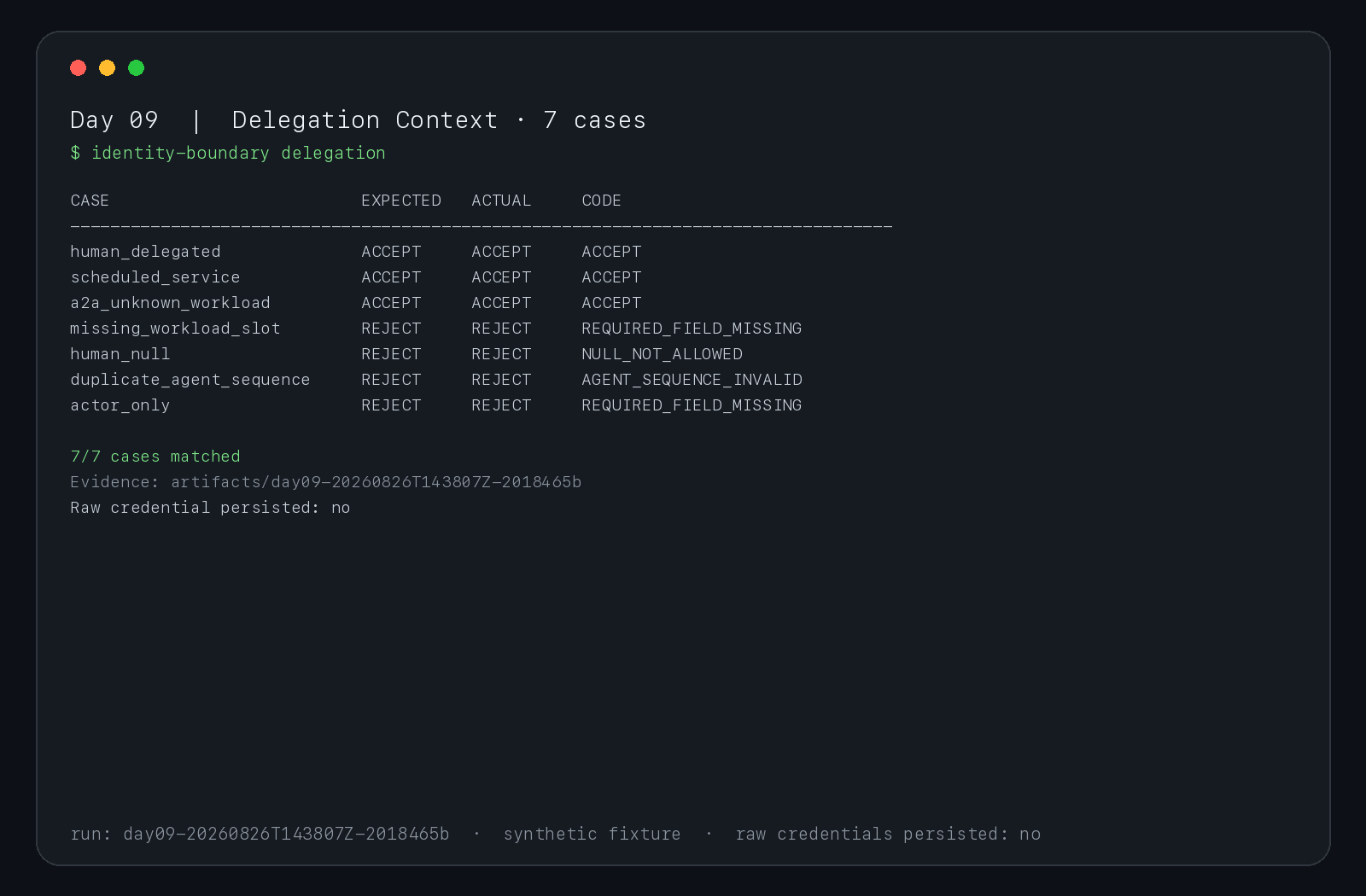
我先用七組測試把規則釘死:角色身分可以明確標成 UNKNOWN,需要存在的 slot 卻不能直接消失。

human_delegated          ACCEPT  ACCEPT
scheduled_service        ACCEPT  ACCEPT
a2a_unknown_workload     ACCEPT  ACCEPT
missing_workload_slot    REJECT  REQUIRED_FIELD_MISSING
human_null               REJECT  NULL_NOT_ALLOWED
duplicate_agent_sequence REJECT  AGENT_SEQUENCE_INVALID
actor_only               REJECT  REQUIRED_FIELD_MISSING

a2a_unknown_workload 把 Human 與 Workload 寫成 UNKNOWN,validator 仍然接受,因為事件已經明說這條 flow 理應有這兩個角色,只是目前沒有足夠證據。missing_workload_slothuman_null 則被拒絕。欄位消失或塞入 null 時,事後無法判斷它代表角色不存在、上游沒傳,還是 parser 失敗。

Delegation Context Lab 的實際 CLI 結果:三組完整或明確 UNKNOWN 的 context 被接受,缺 slot、null、重複 Agent sequence 與 actor-only 紀錄被拒絕。

Lab 圖片由 make lab-02-delegation 的實際輸出重新排版。完整指令、JSON summary、JSONL event 與 hash 保存在 Day 9 evidence,不用從圖片抄指令。

各觀測點只能看見責任鏈的一段

這筆 Tool Call 的 actor chain 有四個 slot,其中 Service 在這條 Human flow 並不存在:

Human      user/sre-oncaller
Service    NOT_APPLICABLE
Agent      sre-copilot@v1 → sre-investigator@v1
Workload   ServiceAccount lab/sre-agent

client_id=sre-console 仍然值得保存,但它屬於 credential context,不是第二個 actor。這條 Human flow 使用 public OAuth client,沒有 client authentication 可以證明 Service principal,因此 service 明寫 NOT_APPLICABLE。到了 Client Credentials flow,通過 client authentication 的 M2M principal 才會填進這個 slot。

這些位置來自不同來源,也有不同的可信程度。Agent display name 不能替代 Human principal,Pod spec 裡的 ServiceAccount 名稱也不能直接證明目前持有 credential 的 workload。若只剩一個 actor 欄位,最後寫進去的值通常取決於哪個元件剛好負責記 Log,而不是完整的責任鏈。

trace_id 可以幫忙串事件,不能代替身分。W3C Trace Context 對 trace-id 的定義是識別一條 distributed trace,它沒有證明 Human、Agent 或 Workload 是誰。W3C Trace Context

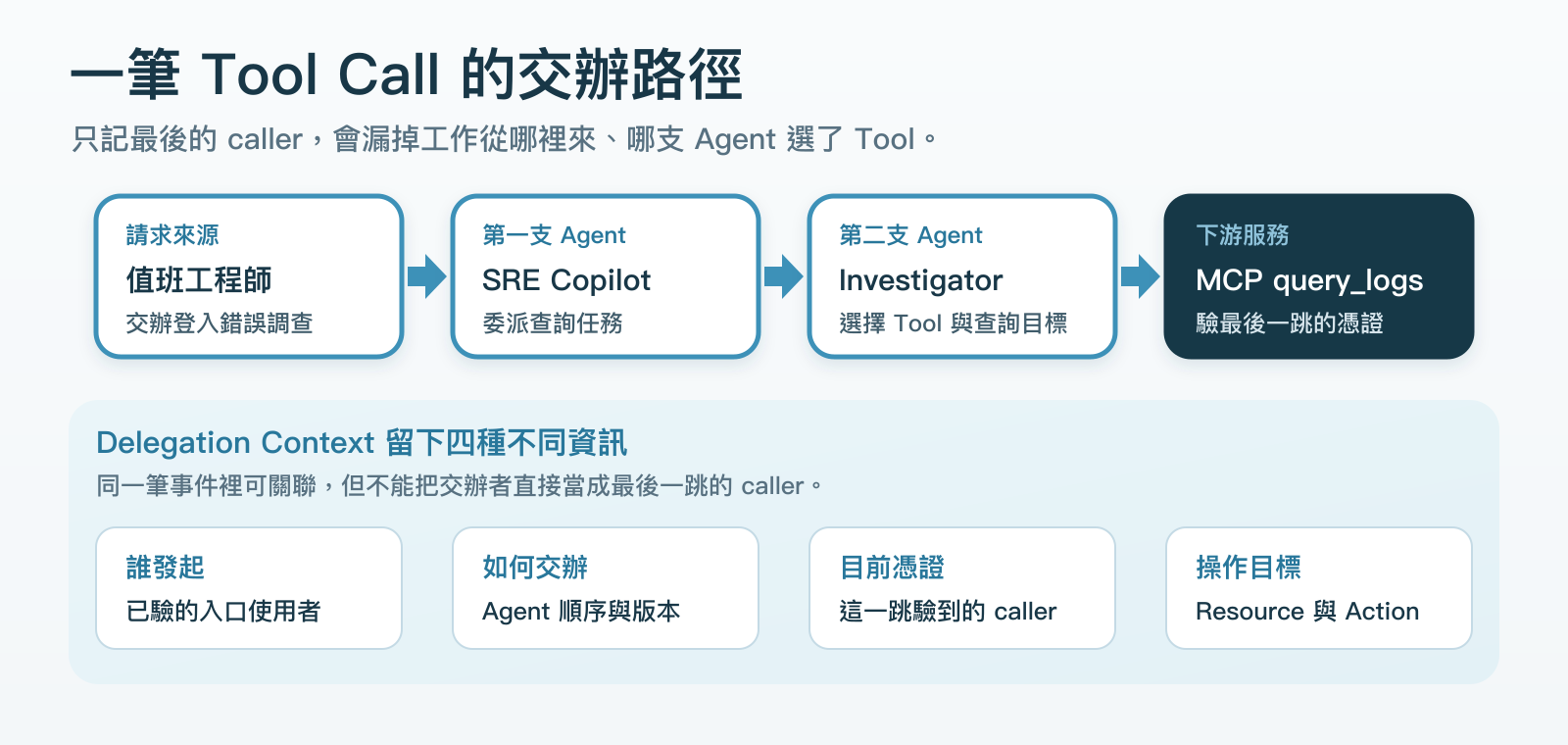
我沒有再把四個值壓成一條更長的 actor 字串,而是讓 Delegation Context 分別保存 actor chain、credential、target 與 correlation 欄位。下圖先看 request 經過哪些角色,再看事件需要留下哪些證據:

值班工程師委派 SRE Copilot,Copilot 再委派 Investigator Agent,由 Kubernetes ServiceAccount workload 呼叫 MCP。Delegation Context 保存完整 actor chain、credential、target 與 correlation 欄位。

這份 Context 保存證據,不自動宣告委派合法。授權規則仍要判斷值班工程師能否使用這個 Agent、Agent 能否執行 query_logs,以及 workload 是否受信任。

Delegation Context v0.1

完整 schema 放在 delegation-context-v0.1.schema.json,使用 JSON Schema Draft 2020-12。下面是正向案例的主要結構:

{
  "schema_version": "delegation-context/v0.1",
  "event_id": "evt-day09-human-delegated",
  "trace_id": "0af7651916cd43dd8448eb211c80319c",
  "timestamp": "2026-08-19T05:52:22Z",
  "flow_kind": "HUMAN_DELEGATED",
  "actor_chain": {
    "human": {
      "state": "PRESENT",
      "principal": "user/sre-oncaller",
      "evidence_source": "verified_access_token.sub",
      "evidence_level": "VERIFIED"
    },
    "service": {
      "state": "NOT_APPLICABLE",
      "reason": "human delegated flow has no separate service actor"
    },
    "agents": [
      {
        "sequence": 0,
        "principal": "agent/sre-copilot",
        "version": "v1",
        "role": "DELEGATING",
        "evidence_source": "controlled_deployment_metadata",
        "evidence_level": "ASSERTED"
      },
      {
        "sequence": 1,
        "principal": "agent/sre-investigator",
        "version": "v1",
        "role": "EXECUTING",
        "evidence_source": "controlled_deployment_metadata",
        "evidence_level": "ASSERTED"
      }
    ],
    "workload": {
      "state": "PRESENT",
      "principal": "k8s://lab/identity-boundary/sa/sre-agent",
      "evidence_source": "kubernetes.serviceaccount",
      "evidence_level": "ASSERTED"
    }
  },
  "credential": {
    "type": "OAUTH_ACCESS_TOKEN",
    "issuer": "https://issuer.lab.example/identity-boundary",
    "subject": "user/sre-oncaller",
    "client_id": "sre-console",
    "audiences": ["mcp://lab/observability/query"],
    "fingerprint": "sha256:5d333c1bd8075ace62ef09e3d8e9ca8153cbe6e4dc51c307ab0806f8fcbd3f3e"
  },
  "target": {
    "resource": "mcp://lab/observability/query",
    "action": "query_logs"
  }
}

這份 JSON 可以直接通過 v0.1 validator。Raw bearer token 不在 schema 允許的欄位中,Lab evidence 也會掃描 compact JWT 與 private-key marker。

每個欄位的用途、查詢方式與升版規則整理在 Delegation Context Field Guide。這份 v0.1 是本系列的 audit contract,不是我替 RFC 或 A2A 發明的新標準。

Evidence level 與身分可信度

正向案例裡的 Human、Agent 與 Workload 都有值,但 evidence_level 故意沒有填成同一級。Service slot 則明確標成 NOT_APPLICABLE

user/sre-oncaller 來自 Day 8 已驗過的 access-token sub,所以標 VERIFIEDsre-console 是 access token 裡的 public OAuth client_id,保存在 credential context 方便查詢。這個值能說明哪個應用參與流程,不能拿來填補不存在的 Service actor。

Agent 名稱與版本來自受控合成 deployment metadata,先標 ASSERTED。公開 Lab 的 ServiceAccount 名稱則取自合成 Pod spec,一樣只標 ASSERTED。Kubernetes 官方把 ServiceAccount 定義為 cluster 內的 non-human identity,Pod 可以使用其 credential 表明身分。不過,把 serviceAccountName 寫進事件,不等於這個 decision point 已驗過 bound token 或 workload attestation。Kubernetes Service Accounts

如果未來 Gateway 驗證 bound ServiceAccount token、SPIFFE SVID 或 cloud workload identity,再把該觀測點的 workload evidence 升為 VERIFIED。先把欄位塗綠,之後反而很難找出治理缺口。

UNKNOWN 與 NOT_APPLICABLE 的 policy 差異

排程 Agent 沒有人坐在瀏覽器前,Human slot 應該是:

{
  "state": "NOT_APPLICABLE",
  "reason": "scheduled execution has no interactive human"
}

A2A request 原本可能由 Human 啟動,但上游沒有傳遞這份 context,則要寫:

{
  "state": "UNKNOWN",
  "reason": "upstream agent did not propagate human identity"
}

兩者對 incident replay 與 policy 的影響不同。第一種不必追查漏資料,第二種可能要 fail closed、降權或要求補充證據。null 把這個差異抹掉了。

A2A 1.0.0 的 Agent Card 會宣告 server 接受哪些 authentication scheme,client 再透過該 scheme 的 out-of-band 流程取得 credential,並在每次 request 的 header 或 transport metadata 中送出。規格可以建立當下 A2A client 的 transport identity,卻不會替應用補出最初的 Human、前一個 Agent 與實際 Workload。A2A Protocol Specification 1.0.0

我在評估 kagent/BYO Agent 邊界時也遇到同一題。A2A 能處理 Agent discovery、呼叫與 task lifecycle。Runtime 沒有收集或轉送 Human、Agent 與 Workload evidence 時,平台仍然無法從協定名稱重建責任鏈。Day 17–18 會再用 Kubernetes Lab 驗證這條邊界。

Agent chain 的 schema 與 semantic validation

JSON Schema 能限制 agents 是陣列、每個 item 有哪些欄位,還能要求全鏈只出現一個 EXECUTING。它不適合把「sequence 必須從 0 連續遞增,而且 executing Agent 一定位於最後」寫成一團難維護的條件。

Lab 因此分兩層:

errors = Draft202012Validator(schema).iter_errors(context)
if errors:
    reject("CONTEXT_SCHEMA_INVALID")

sequences = [agent["sequence"] for agent in agents]
if sequences != list(range(len(agents))):
    reject("AGENT_SEQUENCE_INVALID")

roles = [agent["role"] for agent in agents]
if roles[-1] != "EXECUTING" or "EXECUTING" in roles[:-1]:
    reject("AGENT_ROLE_INVALID")

Schema 管欄位與型別,semantic validator 管跨欄位語意。兩層都回穩定錯誤碼,audit 才能查「哪一種 context 一直壞掉」,不必解析一長串 validation message。

RFC 8693 act 與本地 Audit Context 的分工

RFC 8693 OAuth 2.0 Token Exchange 已定義 JWT act claim:top-level subject 是被代表的一方,act 表示目前 actor,巢狀 act 還能保存之前的 delegation actors。

act 很適合接住 Day 11 的 Token Exchange/OBO,但 Day 9 沒把整份 Context 硬塞成自訂 JWT claim,理由有三個:

  • RFC 的 act 處理 Token delegation identity。Agent artifact version、Kubernetes execution evidence、target action 與本地 evidence level 仍需要自己的 audit contract。
  • RFC 明確說 access-control policy 只應考慮 top-level claims 與目前 actor,較早的巢狀 actors 是資訊性歷史。Incident replay 需要歷史,不代表每一個 prior actor 都能直接參與現在的 ALLOW。
  • Context 可能來自多個觀測點。只有 access token 的欄位由 Token verifier 證明,其餘欄位要附各自的來源與 integrity protection。

Token Exchange 可以產生可驗的 subject/current actor。Delegation Context 再把它與 Agent、Workload、target、trace 串進治理事件,兩者處理不同層次的資料。

重現 Day 9 Delegation Lab

開頭的七組結果都能從 repo root 重跑。三個正向案例涵蓋 Human 委派、無人排程,以及 Human/Workload evidence 暫時未知的 A2A flow。四個負向案例分別拿掉必要 slot、放入 null、破壞 Agent sequence,或退回單一 actor 字串。

從 repo root 執行:

make lab-02-up
make lab-02-check
make lab-02-delegation

預期最後看到:

7/7 cases matched
Raw credential persisted: no

如果要把結果交給 CI 或其他工具處理,可以輸出 JSON:

uv run --directory labs/02-identity-boundary \
  identity-boundary delegation \
  --artifact-root labs/02-identity-boundary/artifacts \
  --output json

每次 run 會寫入 schema snapshot、contexts、expected results、summary、manifest 與 JSONL events。Day 9 截圖保留的是 2026-08-26 完成這個 slice 時的輸出,當時共用 Lab 有 37 個測試。Day 10–12 後來繼續擴充同一套 Lab。2026-09-01 重新執行 make lab-02-check 為 72 tests passed、branch coverage 91.17%,make lab-02-delegation 仍是 7/7 matched,dependency audit 也維持通過。

清理仍由 ownership marker 限制範圍:

make lab-02-down

正式環境的 Context integrity 與 workload attestation

v0.1 固定了資料形狀,沒有替 production 完成四件事:

  1. Context integrity:哪個元件有權新增或修改 Agent/Workload slot?跨 trust boundary 時要用簽章、受信任 envelope 或由 Gateway 重建,不能相信 client 自報。
  2. Workload attestation:deployment label 與 ServiceAccount 名稱不等於當次 workload 已驗證。要決定是否採 bound token、SPIFFE、cloud identity 或其他機制。
  3. Propagation 與降級策略:A2A/MCP hop 拿不到 Human 或 Workload context 時,是拒絕、縮小 scope,還是只允許低風險 Tool?UNKNOWN 讓 policy 有資料可判斷,不替 policy 做決定。
  4. Privacy 與 retention:Human principal、trace、Agent chain 與 credential fingerprint 都能被關聯。它們不該全部變成 metric label,也不能無期限保存。這筆帳會在 Day 22–23 詳算。

Token Passthrough 會破壞 Attribution

Day 9 解決的是 audit data model。現在一筆事件能回答:值班工程師提出目的、Copilot 委派、Investigator 決定執行、哪個 workload 送出 request,以及它使用的 credential 對哪個 resource 有效。

但資料結構畫得再完整,也擋不住一條常見捷徑:Copilot 收到值班工程師的 access token,原封不動傳給 Investigator,再一路送到 MCP Server。

這樣每個 hop 都「有 Token」,整條 network path 卻只看得到值班工程師。Workload attribution 消失,resource audience 也可能被迫放寬。

下一篇直接跑這條捷徑:Token passthrough 為什麼最好接,後來卻最難說清楚。


上一篇
Day 8|JWT 簽章過了,為什麼還是不能放行?Issuer、Audience、Scope 與 Claim 實測
系列文
當企業導入 Agent:30 天拆解治理邊界與平台選型9
圖片
  熱門推薦
圖片
{{ item.channelVendor }} | {{ item.webinarstarted }} |
{{ formatDate(item.duration) }}
直播中

尚未有邦友留言

立即登入留言