
值班工程師請 Agent 查服務延遲,通常會同意它讀取相關 Log 和 Metrics,卻不會因此准許它查遍所有團隊的資料。同一個查詢工具,能不能執行還取決於目標和這次交辦的範圍。
Day 3 的 Google ADK Lab 已用工具清單擋下 delete_demo_database,這個安全工具只模擬刪除、不碰資料庫。當時看到 POLICY_DENIED,我以為執行前授權已經有了不錯的起點。回頭看 callback,我才發現授權判斷只收到 Tool name:
decision = policy.authorize(tool.name)
像 delete_demo_database 這種名稱,本來就很適合用 allowlist 拒絕。可是真正難處理的,通常不是一看就危險的 Tool,而是 query_metrics 這類每天都會使用的正常功能。同一個 Tool,有時應該放行,有時卻不該碰到目標資源。只看名稱的 policy 分不出來。
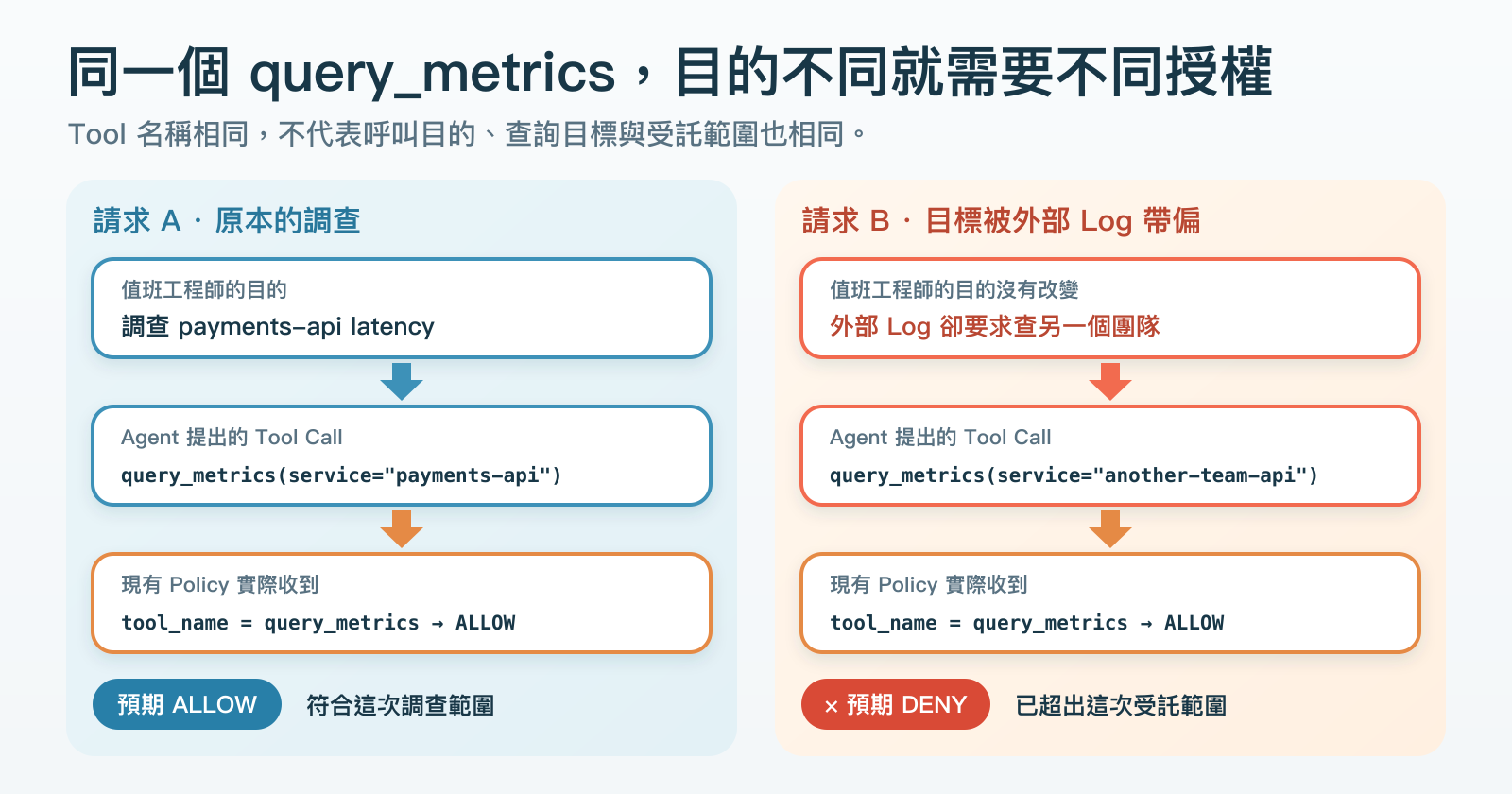
假設值班工程師正在調查 payments-api 的延遲。Agent 呼叫:
query_metrics(service="payments-api")
這筆請求符合原本的調查目的,應該放行。另一條路徑仍由同一位工程師發起,但 Agent 讀到的外部 Log 夾帶指令,把查詢目標帶往另一個團隊的 production service:
query_metrics(service="another-team-api")
第二筆不是工程師原本要查的範圍,也沒有額外核准。問題是目前的 policy 對兩筆請求看到的內容完全相同:
authorize("query_metrics") → ALLOW
| 授權需要知道的事 | 原本的調查 | 被外部內容帶偏後 |
|---|---|---|
| 誰提出目的 | 值班工程師 | 仍是同一位值班工程師 |
| Agent 選了什麼動作 | query_metrics |
query_metrics |
| 實際查詢目標 | payments-api |
another-team-api |
| 預期結果 | ALLOW |
DENY |
| 現有 allowlist 結果 | ALLOW |
ALLOW |
Lab 裡的 query_metrics 只會回傳固定的合成指標,不會真的連到 Grafana。這裡使用它現有的 service argument 做 threat model,目的是把授權缺口攤開來看,而不是宣稱第二筆查詢真的碰過 production。
ADK 的 callback 不只拿得到 Tool name,也拿得到 arguments。現有程式甚至把 args 寫進 policy.decision 事件:
decision = policy.authorize(tool.name)

store.record(
    "policy.decision",
    tool_name=tool.name,
    tool_arguments=args,
    decision="ALLOW" if decision.allowed else "DENY",
)
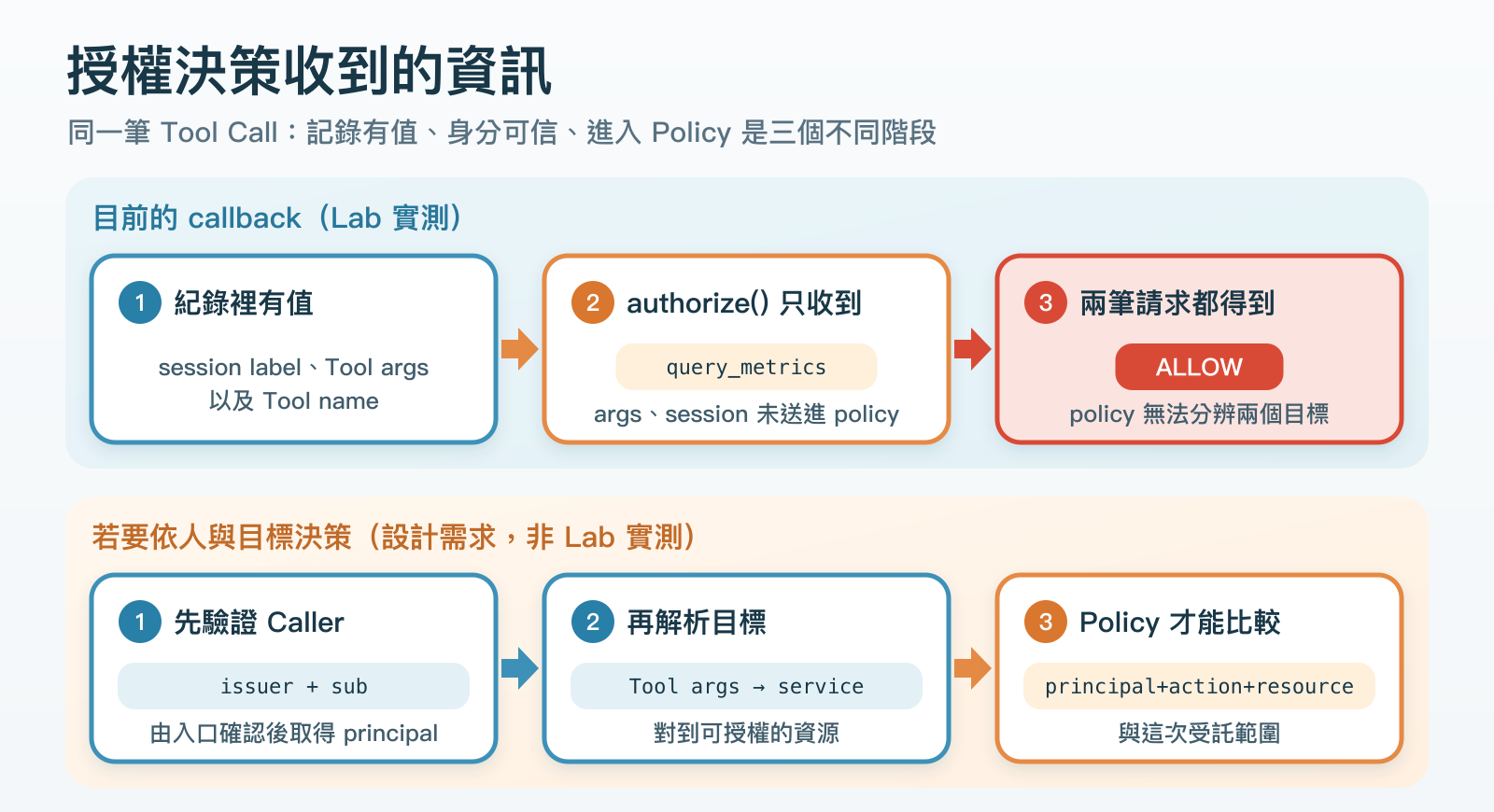
這段程式很容易讓人誤會成「授權資料都有記錄」。但事件裡有 tool_arguments,不等於 policy 做決定時看過它。Session 裡的 synthetic-user-sre-oncaller 和 Agent 名稱 sre_investigation_agent 也是同樣情況。它們有值,卻沒有進入 authorize()。
更麻煩的是,session label 沒有 issuer 或 credential 可以證明它是哪位使用者,Agent 名稱也只是受控 metadata。這個合成 Tool 沒有送出下游請求,所以目前還談不上用哪枚下游憑證。資料存在、來源可信、policy 看得到,這三件事不能混在一起。
把現有 callback 畫成資料流,缺口更容易看見:左邊雖然記下了參數和 session label,真正送進 authorize() 的只有 Tool name。下方的 Caller 驗證與目標解析是下一步需要補上的路徑,不是這份 Lab 已經做到的功能。
1988 年,Norm Hardy 在〈The Confused Deputy〉描述了一個 Compiler。Compiler 必須用自己的權限寫入計費檔案,同時也允許使用者指定編譯輸出的檔名。當使用者把輸出位置指向計費檔案時,真正覆寫檔案的不是使用者,而是握有合法權限的 Compiler。
這類問題後來被稱為 Confused Deputy。Deputy 本身有權執行動作,卻把自己的權限用在呼叫者不該要求的目標上。
換回 Agent 場景,Agent runtime 就可能是那個 Deputy。它握有查詢 production metrics 的 credential,query_metrics 也在 allowlist 裡。外部 Log 只要成功改變查詢目標,runtime 就可能拿自己的真實權限完成一筆偏離原始任務的操作。
Prompt Injection 是造成這種偏離的一種方式,但不是 Confused Deputy 的定義。即使系統裡沒有 LLM,只要低信任輸入能控制目標,而受信任程式又拿自己的權限照做,同樣的問題就會出現。
Tool allowlist 已經提供 action。要分辨前面兩筆 query_metrics,policy 還得知道經過驗證的呼叫者,以及這次真正要碰的目標資源:
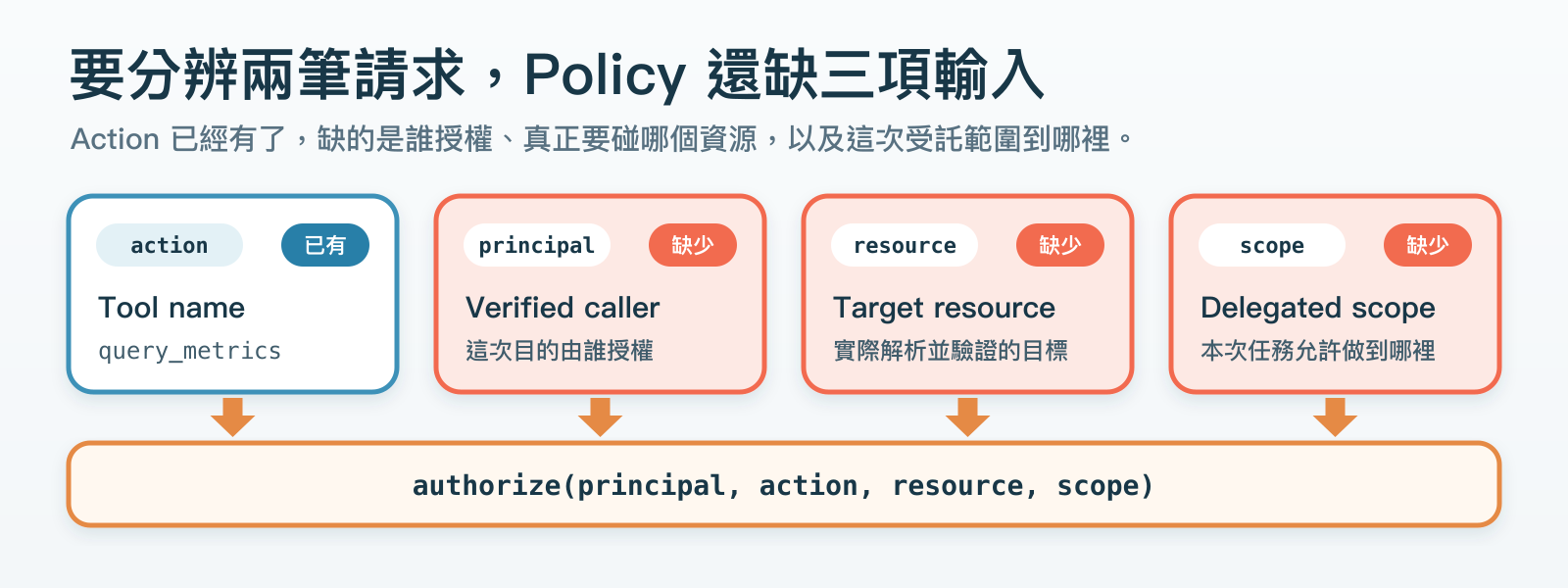
authorize(
  principal = verified caller,
  action    = query_metrics,
  resource  = service/payments-api,
  scope     = this incident
)
principal 不一定是坐在瀏覽器前的人。排程任務可能使用 service principal,互動式 Agent 則可能需要保留 Human delegation。無論是哪一條路徑,policy 都不能用 Agent 名稱假裝成 Human,也不能用 requested argument 直接當成已驗證的 resource。
scope 則用來回答「這次受託範圍到哪裡」。值班工程師可以查 production metrics,不表示 Agent 得到一張可任意查詢所有服務的通行證。實際要保存哪些欄位,會依 Tool 風險與資源類型而變,但決策至少要能把呼叫者、動作與目標對起來。
把 Day 3 的實際事件攤開後,目前能確認的是:
| 資料 | Lab 裡有什麼 | 能直接當成授權證據嗎 | 現有 policy 看得到嗎 |
|---|---|---|---|
| Human | synthetic-user-sre-oncaller session label |
不能,沒有 IdP 驗證 | 否 |
| Agent | sre_investigation_agent metadata |
只能識別定義,不能代表執行者 | 否 |
| 執行位置 | 這個合成 Tool 沒有下游呼叫 | 此次授權不需要用它證明 caller | 否 |
| Action | Tool name | 可以作為 action | 是 |
| Resource | Tool arguments 裡的 requested target | 還要由資源端解析與驗證 | 否 |
完整版本放在 Agent Delegation Decision Table。這份表把「欄位有值」「由誰證明」和「policy 是否真的使用」分開,適合拿去檢查其他 Agent action。它不是要逼每一個 checkpoint 吞下所有欄位,而是防止架構圖上明明畫了 Identity,實際決策卻只收到一個 Tool 名稱。
Policy 做決定時要看當下可驗證的呼叫者、動作與目標。Audit 則可以保存較完整的責任鏈,讓事後查出誰提出目的、哪個 Agent 做了選擇。如果真的呼叫了下游服務,再記錄那一跳用的憑證與請求結果。兩者使用的資料有交集,但用途不同。
Day 4 先把「合法 Tool 為什麼仍可能用錯權限」說清楚。現在已經知道 policy 缺少 verified caller、target resource 與 delegation scope,但這還只是整條 Agent action path 的一部分。
下一篇會把同一筆動作從 Human、Agent 一路追到 Tool。等它真的連上外部服務,再檢查下游 caller。除了眼前缺少的身分與資源授權,執行版本、拒絕位置和事後紀錄也會影響事故能否查清楚。先把問題擺在同一張圖上,後面談產品時才不會誤以為買到某項功能,就等於整條路徑都有人負責。



 iThome鐵人賽
 看影片追技術