
把 agentgateway 接進 Kubernetes 後,我們沒有拆掉原本的 Ingress。Public Host、Certificate 與其他服務都還在既有入口上,為了多一條 AI Route 就重做整個對外邊界,變更範圍太大,也沒有必要。
麻煩出在兩層都能做相同的事。它們都能驗 Token、改 Header、Rate Limit、設定 Timeout,甚至重送失敗的 Request。串接當天很快就通了,後續 Review 卻一直卡在功能重疊。相同行為有兩份設定,事故發生時也會出現兩套說法。
我們最後逐項指定 Owner:既有入口保留 TLS、Public Host、粗粒度 Routing 與 Access Log,Caller Authentication、AI-aware Policy、Backend Credential 與 Audit Context 則交給 agentgateway。先看這張去識別化的實務架構圖,重點是兩層各自能改什麼,以及 AI Backend 為什麼只接受治理層後面的路徑。
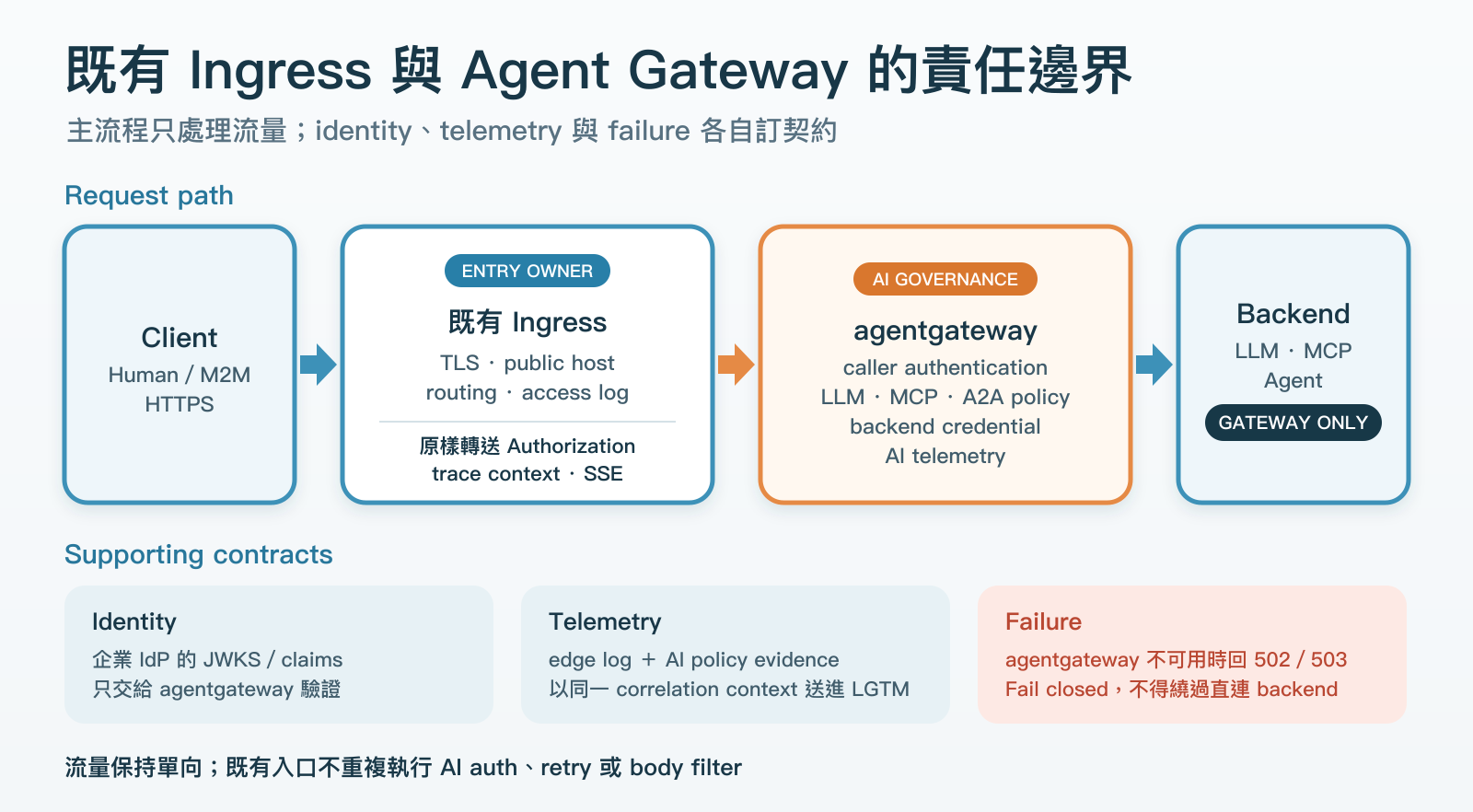
公開 Lab 用單層 agentgateway 檢查 Credential、SSE 與錯誤傳遞。雙層入口的分工則沿著圖中的路徑逐項說明。
當時的既有元件是 Kong。Kong Ingress Controller 會把 Kubernetes Ingress、HTTPRoute 等 Resource 轉成 Kong Gateway 設定,真正接收 Request、執行 Plugin 並轉送 Upstream Traffic 的則是 Kong Gateway。
Kong 本來就能處理許多流量控制。它繼續留在架構裡,是因為 Public Endpoint、Certificate、Host Routing、其他非 AI Service 與既有 Access Log 已經由這層承接。導入 agentgateway 後,AI Route 上只保留幾項入口責任:
502 或 503,不開直達 Backend 的旁路。Caller JWT、Consumer Key、MCP/A2A/LLM-aware Policy、Backend Credential 與 AI Audit 都往 agentgateway 收斂。前一層也拿掉會讀寫 Body 的 Filter、AI Route 上的 Application Retry,以及可能改變 SSE 行為的 Response Processing。
這裡的 Pass-through 不等於「Kong 什麼都不做」。它仍是企業入口,只是不再解釋 AI Route 的 Caller Identity,也不替後面的治理層做第二次決策。判斷邊界時,不能只數每層開了多少功能,還要看它是否改動另一層負責的 Identity、Credential 或 Body。
假設 Edge 與 agentgateway 都驗同一枚 JWT。兩邊的 JWKS Cache 更新時間不同,或其中一邊少驗一個 Audience,就可能出現外層放行、內層回 401。Client 只看到 Authentication Failure,值班的人卻要同時排查 IdP、兩份 Policy 與 Route。
Header Mutation 也會破壞 Day 14 才拆開的 Credential Boundary。Edge 如果先替換 Authorization,agentgateway 就看不到 Caller Credential。兩邊各產生一個 Request ID 時,Trace 與 Audit 也很難自然接起來。普通 JSON Request 也許看不出問題,Response Buffering 或 Body Filter 到了 SSE 才會讓模型看起來像卡住。
Retry 更需要分清楚產品預設與架構風險。若兩層都設定「失敗後再試一次」,一次呼叫在最壞情況下可能放大成四次。後面若接的是付款、刪除或修改設定的 Tool,代價就不只是多花一些 Token。這個四次呼叫是雙層 Application Retry 的風險模型,不是 Kong 遇到每個 5xx 或 429 都會自動重送。Kong 的預設行為主要處理特定 Transport Failure,Response Body 已開始 Streaming 後也不會任意重試。
幾次 Review 都繞回相同問題後,我們把順序反過來。先替每項功能指定 Owner,再決定開啟哪個產品選項。兩層都需要保留控制時,就拆成不同維度,例如外層限制 IP Abuse,內層計算 Principal Quota,而不是複製同一份 Rule。
| 能力 | Edge/既有 Ingress | Agent Gateway |
|---|---|---|
| Authentication | 限制網路來源並原樣轉送 Caller Authorization |
驗 Issuer、Audience、Principal、Consumer 與 Resource Policy |
| Rate Limit | IP、Connection、通用 Abuse Protection | Principal、Client、Model、Tool、Provider Quota |
| Routing | Public Host、粗粒度 Path | LLM/MCP/A2A-aware Routing |
| Header | Forwarding 與 Trace Contract | Audit Context、Backend Credential、移除不可信 Internal Header |
| Retry | AI Route 不設定 Application Retry | 只有具 Idempotency Contract 的 Operation 才考慮開啟 |
| Telemetry | TLS、Connection、Host、Request ID | Identity、Policy、Model/Tool Decision、Backend Outcome |
這張表的用途是逼每個行為留下唯一 Owner,不是要求所有環境都部署相同拓撲。完整版本放在 Edge/Ingress 與 Agent Gateway 責任矩陣,另外包含 Timeout、SSE、Error Propagation 與 Fail-closed,可直接帶進 Route Review。
Backend 在 Network 與 Routing 上都不接受 Edge 直接呼叫。agentgateway 掛掉時,Request 必須明確失敗。如果 Edge 還藏著一條 Fallback Route 可以直連 MCP Server 或 LLM Provider,最需要治理的時候反而會繞過治理點。
兩層 Telemetry 也回答不同問題。Edge Log 用來看 TLS、Host、Connection 與入口 Request ID,agentgateway 才記錄 Principal、Policy、Model/Tool 與 Backend Outcome。兩邊用同一個 Correlation Context 串接,欄位 Owner 仍要分開。到了 Day 20 之後,這條資料路徑會再接回既有 LGTM 架構。
聊天介面常在模型還沒生成完時,就逐段顯示文字。SSE(Server-Sent Events)讓伺服器在同一條 HTTP 連線持續送出事件,正適合承接這種回應。一般 JSON Response 一次回完,兩層的 Buffer、Read Timeout 與 Retry 即使重疊,也不一定立刻出事。SSE Connection 會活得更久,模型或 Tool 執行期間又可能有空檔。外層 Idle Timeout、Response Compression、Body Transform 或 Event Flush 只要有一項不合,使用者就會先看到停頓或斷線。
下面用同一組上游 Event 比較兩種轉送方式。看 Client 收到第一段資料的時間,就能分辨模型仍在工作,還是中間某一層把已產生的內容攔住。
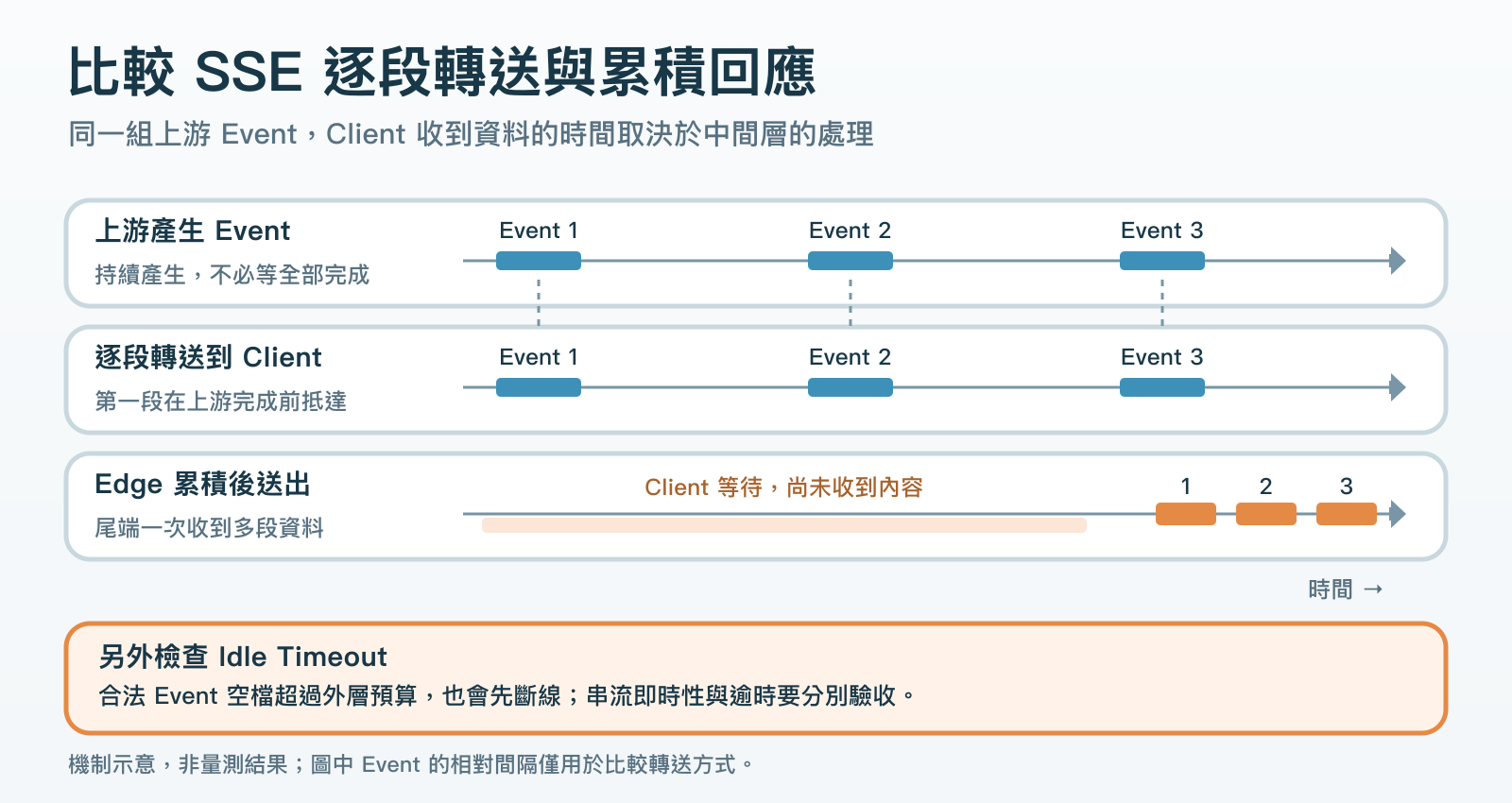
agentgateway 的 Streaming 文件 說明 OpenAI、Azure 與 Anthropic 會使用 SSE,Gateway 在 Chunk 抵達時向 Client 轉送。若 Route 額外啟用 Body Buffering,Response 才會先累積再送出。因此「支援 Streaming」不能只看功能表,必須實測第一段 Event 是否在 Upstream 完成前抵達。
Streaming Policy 也有自己的限制。Response Guard 沒有啟用時,SSE 順利穿透只代表 Transport 沒被 Buffer,不能推論敏感內容政策也已覆蓋 Stream。已經送到 Client 的 Chunk 更不可能事後收回。Transport、Content Policy 與 Timeout Budget 是三份不同的驗收。
Timeout 則要當成完整 Budget。Edge 的 Connection/Idle Timeout 必須容得下 agentgateway Route、Backend Timeout 與合法 Event Gap,Telemetry 也要看得出哪一層先截止。兩層都填相同數字,只會讓 Race Condition 決定 Client 最後收到哪個 Status Code。
上游回 429 與 Retry-After 時,也要確認兩層入口沒有擅自重送或改寫,否則呼叫端和 Provider 會看到不同次數的 Request。Route Review 因此要把 SSE、錯誤傳遞與 Retry 一起交給明確的 Owner。
公開 Lab 03 用一個 agentgateway 和合成 Provider 隔離這些變因。SSE 的第一段 Event 在上游完成前抵達。429 與 Retry-After: 7 原樣回傳且沒有多送一次請求。缺少 Caller Credential 則在 Provider 前得到 401。Provider 收到的是 Gateway Credential,而不是入口 Caller Key。
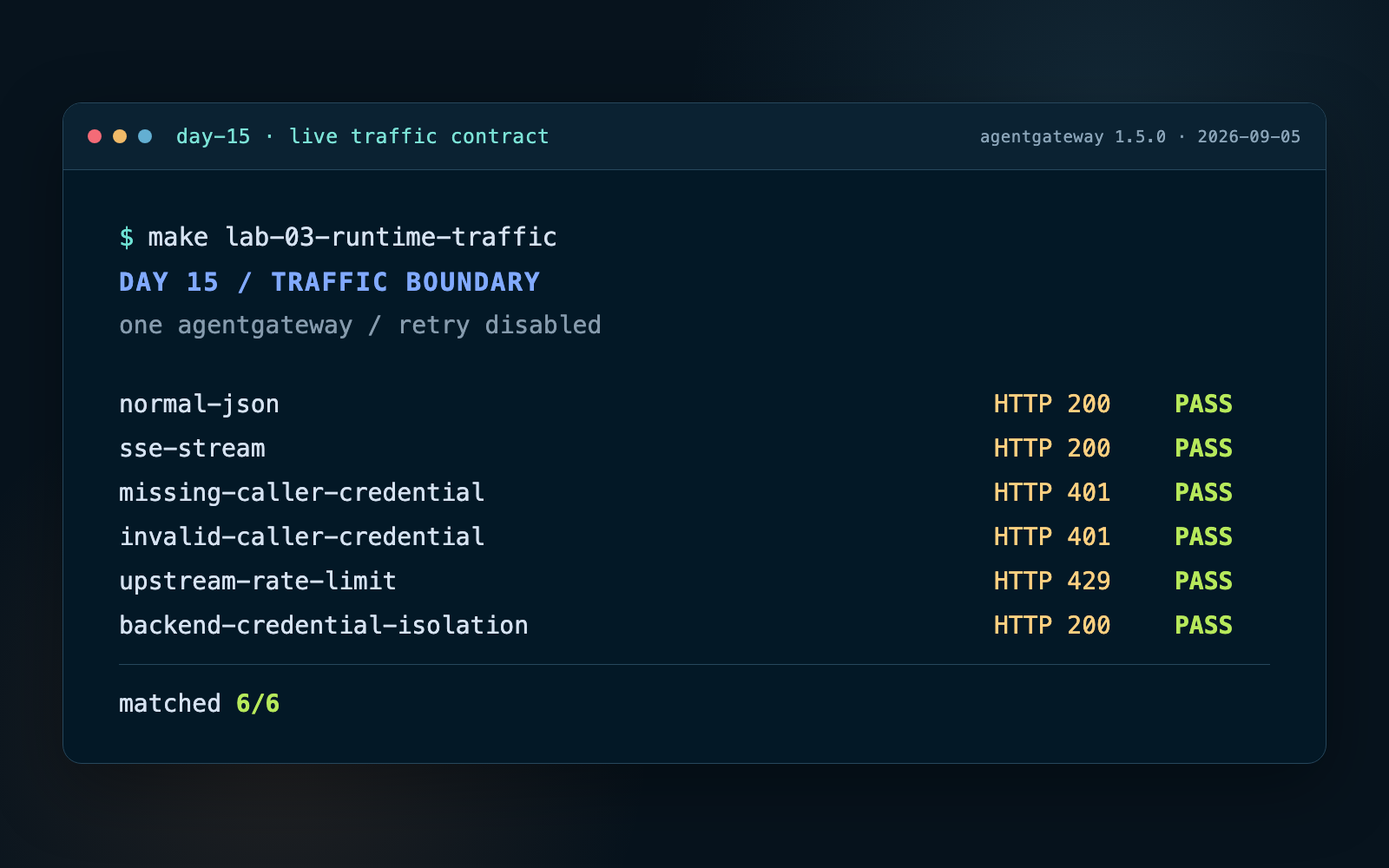
這組結果只檢查單層 agentgateway 的 Traffic Contract。既有 Ingress 與 agentgateway 的雙層 Timeout、Certificate 和 Route 如何共存,仍須以本文的責任矩陣回到部署環境核對。完整設定與原始輸出留在 Day 15 evidence。
責任矩陣若只出現在文章裡,很快又會漂移。最容易重疊的項目應直接進 Route Review 或 Runbook:
AUTHENTICATION
  edge: preserve caller credential
  agentgateway: validate caller and inject backend credential

RETRY
  edge: no application retry on AI route
  agentgateway: require idempotency review before enable

TIMEOUT
  edge: outer connection / idle budget
  agentgateway: route / backend budget
  rule: outer budget must cover inner budget and legal stream gaps

ERROR
  preserve 401 / 429 / 5xx and Retry-After
  agentgateway unavailable => 502 / 503, no backend bypass
Rate Limit 也要寫清楚維度。Edge 可以擋 IP Abuse 或 Connection Flood,agentgateway 則按 Principal、Client、Model、Tool 或 Provider Quota 計算。兩層都設定「每分鐘 100 次」卻沒有共同 Actor Contract,值班時只會看到兩個來源不同的 429。
Header 則需要 Reserved List,標示哪些值由 Edge 產生、哪些只能由 agentgateway 寫,以及 Backend 可以信任哪些來源。Caller 若能自行送入 x-audit-human 或 x-policy-result,Gateway 又沒有先移除再重建,再完整的 Audit Event 都只是可偽造的文字。
這次切分讓企業保留既有對外入口,AI Traffic 也多了一個清楚的 Policy Checkpoint。Request 出問題時,同一份 Correlation Context 能一路查到 Edge 是否收到、agentgateway 為何拒絕,以及 Backend 最後有沒有被呼叫,不必再猜哪一層先改過 Credential、Header 或 Response。
agentgateway 的責任也到此為止。它可以管理 LLM、MCP 與 A2A Traffic,卻不會替團隊實作 Thinking、Memory、Workflow 或 HITL,也不接手 Agent 的 Build、Deployment、Discovery 與日常操作。
Day 16 會把 kagent、agentgateway 與自建 Runtime 拆成 Runtime、Control Plane、Traffic Path 三層。接下來要確認的不是另一個 Gateway 功能,而是平台替 Agent Team 接住了哪些工作,又把哪些責任留在 Runtime 裡。



 iThome鐵人賽
 看影片追技術